


Add us as your preferred source on Google to see more of our content in Search.
 Add to Preferred Sources
Private sector involvement in international development can take various forms and occur at various levels – from providing funding for development projects to implementing activities to achieve sustainable development goals. The perception that it is a government’s sole responsibility to facilitate development is therefore outdated and unsustainable in the long term. To achieve the Sustainable Development Goals (SDGs), the involvement of all actors and beneficiaries is important, and the synergy of joint efforts can bring beneficial results for everyone. The private sector can play a vital role in achieving several SDGs, such as gender equality, clean and affordable energy, innovations and infrastructure, corporate social responsibility, health and well-being. With the major donor cuts that have been announced in 2025, the aid sector is exploring more funding sources options, and viewing the private sector as an important player in this regard. However, involving it can bring both advantages and challenges. Experts share their opinions on the matter.
Key Takeaways:
- In developing countries, private sector operations are responsible for, on average, 60% of the Gross Domestic Product, while generating 90% of jobs and 80% of capital inflows according to the Organization for Economic Cooperation and Development.
- Achieving the 169 ambitious targets of the 17 SDGs depends heavily on innovation across the global private sector.
- According to experts, involving the private sector in international development brings additional capital, innovation and efficiency, and expanded economic opportunities through job creation, new value chains, and inclusive products and services.
- However, private sector engagement can lead to misaligned profit-driven priorities, unequal or limited benefits for vulnerable communities, and risks related to weak regulation, low accountability, and power imbalances.
DevelopmentAid: What are the main pros and cons of involving the private sector in international development, and how can countries maximize the benefits while minimizing the risks?

“Over the past decade, the private sector has become an increasingly visible partner in international development, a shift driven as much by necessity as by opportunity. Large corporations can bring capital, innovation, and a results-driven mindset that help to close persistent gaps in employment, environmental challenges, service delivery, and market access. In many of the fragile and low-governance contexts where I have worked, private actors have played an important role in expanding value chains, creating jobs for youth and vulnerable groups, and opening new economic spaces for women. But the model is not without complications. Commercial incentives don’t always align neatly with social goals and, in the absence of strong regulation, private initiatives can unintentionally reinforce gender inequalities, strain local markets, or overlook the specific risks facing marginalized groups. Add to this the global North–South power dynamics that still shape many development partnerships, and it becomes easy for external priorities to overshadow local needs or weaken local institutions, contravening Do No Harm principles. Maximizing benefits requires more intentional design. Governments and development partners need to establish clear social and environmental safeguards, insist on fragility-, gender- and conflict-sensitive assessments, and ensure genuine local ownership from the start. That means engaging not only national and local authorities but also community leaders, cooperatives, women’s groups, and youth organizations, and those who understand the implications of the interventions on the ground. When private incentives are aligned with national priorities and anchored in transparent, inclusive decision-making, private sector engagement can become a powerful contributor to community resilience and long-term, sustainable development.”

“Private sector actors have continually worked alongside development agencies to drive change. Below are the pros and cons of involving the private sector in international development:
The Pros:
- Willingness to scale innovations: To maximize profits, private sector actors have the willingness to invest in scaling innovations while continually upgrading the original models to meet the demands of changing markets. This positions the private sector as a key driver of change in development.
- Ability to mobilize capital: Private sector actors have the potential to mobilize significant capital both domestically and from foreign countries to fund expansion and entry into new markets. This positions them as key actors in international development.
- Efficiency: Driven by the need to increase profits, private sector actors are able to optimize resources, streamline processes, and reduce costs, leading to the more efficient use of resources available from development agencies.
- Facilitating inclusion: By developing innovative products and services for a variety of markets, private sector actors can promote financial inclusion and women’s economic empowerment.
The cons:
- Misaligned priorities: Private sector actors are largely driven by the goal of maximizing profits and return on investment, a desire that conflicts with international development priorities such as poverty reduction, equity, and environmental sustainability.
- Low appetite to operate in resilience zones: Private investment tends to flow to middle-income countries or sectors that promise higher returns, leaving out marginalized and resilience zones, including war-torn zones where development programming is highly required.”

“Concepts like impact investing, blended finance, and corporate social responsibility (CSR) should be unpacked. CSR is basically philanthropy – private actors trying to ‘give something back’. Often small in scale and not development game changers, CSR is frequently about corporate PR and small pilot projects that rarely scale. Better to have CSR than not, but in the broader context of the private sector’s large role, CSR is small potatoes. Impact investment is somewhat of a fad – rebranding development projects with capital-market language and RBM tools. The model can involve public funds from development agencies. Impact investing is nice to do at the margins, but not central to development. Blended finance, by contrast, has always been at the heart of development, at least since investments in modern infrastructure. The best investments are those where everyone wants to invest because the returns are compelling. The ‘additivity’ principle is about using public money to unlock more finance. Development agencies should rarely spend public funds on projects with no additivity. If CSR and impact investing rebrand small parts of the development pie, blended finance has always been central and is now being rediscovered. Put differently, the pros and cons (for governments) of involving the private sector in development are roughly those of involving the private sector (or commercial actors, irrespective of ownership) in anything. On the pro side, governments can gain access to resources (finance, skills, technologies) that would otherwise be unavailable or would be much more costly. On the con side, governments (for a host of political economy reasons) may be unable to effectively manage private sector/commercial engagement in development or, more accurately, the losses that may result from private malfeasance may exceed the losses that may accrue in its absence. Another point is that countries can maximize the benefits/minimize the risks of engaging the private sector in development by using the same tools they use to manage their relationships with the private sector in general. Transparency, practicality, clear divisions of labour between public and private actors, and sufficient public-sector technical expertise to ensure that private actors actually fulfill their end of the bargain and do not squander public monies are clear preconditions for effective state management of private actors – in public governance in general and development in particular. However, as the specific institutional forms these preconditions take on may differ over time, space, and the nature of the activities in question, there is no silver bullet, ‘one-size-fits-all’ answer to this part of the question.”

“In the past decade, the private sector has moved from being a peripheral actor in international development to a central partner. If only a modest portion of the potential private capital could reach high-risk or underserved markets, with the right incentives and risk-sharing mechanisms in place, its value would not be just funding. Private investment can complement public budgets, unlock innovation, efficiency, and a culture of accountability – through benchmarking, impact measurement, and performance incentives – injecting much-needed rigor into development efforts. It’s worth remembering that the risks frequently attributed to private investment (misaligned intentions, unequal benefits, short-term thinking) are not exclusive to business. Public donors’ political agendas and territorial interests have always shaped governmental aid. In many contexts, bringing in private actors can improve governance, diversify decision-making, and challenge inefficiencies. To capture the benefits while keeping the pitfalls in check, countries need stronger safeguards: clear regulations, transparent partnership agreements, and robust social and environmental standards. And success depends on ensuring investments serve national priorities, center local actors, and use blended finance strategically so that public funds de-risk projects without subsidizing them. Collaboration between public and private actors can create a more impactful development ecosystem – one that is equipped for the complex challenges that can only be tackled using a diversity of means and perspectives.”

“Involving the private sector in international development comes with both benefits and risks. It can result in the mobilisation of additional financing beyond public aid as well as drive innovation and efficiency in service delivery. Furthermore, it can create employment and stimulate economic growth, thus helping in the achievement of the Sustainable Development Goals. The downside of engaging private sector actors relates to possible insufficient accountability and transparency, as well as a bias towards commercially profitable rather than needy sectors. To maximize the benefits while minimizing the risks, countries should strengthen regulatory frameworks and governance and align private investments with national development strategies and the SDGs. Countries can also maintain public-sector oversight by employing rigorous monitoring and evaluation mechanisms and promoting pro-poor and inclusive business models rather than those purely driven by profit.”

“Engaging the private sector in international development can be a powerful resource when aligned with social and environmental needs. Businesses bring agility, investment, and innovation – all qualities that are essential to scale development programs and solutions. In addition, through blended finance or impact partnerships, private actors help to bridge the gap between policy ambition and practical delivery. However, commercial incentives can influence the dilution of social outcomes, and “impact” can become a branding exercise if accountability is weak. When profit motives overshadow inclusion or environmental integrity, projects risk creating dependency or inequity rather than resilience. The key lies in the quality of the partnership. Governments and donors must set clear expectations for transparency, shared value, and long-term impact, while businesses should see communities not as beneficiaries but as co-investors in sustainability. Data, local participation, and consistent monitoring are essential to keep incentives aligned. When development partners use the private sector’s efficiency without surrendering direction, they create space for a new kind of growth: commercially sound, socially grounded, and resilient by design.”
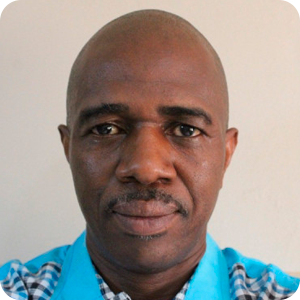
“I am in favor of the further involvement of the private sector in the achievement of the Sustainable Development Goals. At a time of concerns and shifts on international development funding, we need to attach greater importance to private sector contributions. Private sector actors, especially in the Global South, are developing and implementing innovative and efficient forms of investment in local development that need to be assessed, coordinated, and leveraged due to their lower profile but critical impact on local populations. This contribution is overshadowed by mainstream donors. Several private sector entities have launched their own foundations and development departments to fund critical emergencies, humanitarian and lifesaving actions as well as other effective programs in climate, health, education, agriculture, entrepreneurship, technologies, and other key development sectors. Beyond private sector-operated foundations and development entities, there are examples of co-funding partnerships whereby private sector entities cooperate with development organizations to support life-changing grassroots activities. Also, blended finance cases exist whereby financial institutions and development agencies engage in partnerships to leverage seed capital from financial institutions and technical assistance from development entities. These partnership approaches may reduce donor dependency and create alternative development funding mechanisms. Nonetheless, these private sector-driven investments in local development are often isolated, irregular, and lack an appropriate policy framework. The emerging policy agenda on private sector contributions to local development may learn, for example, from the mining sector’s important local content commitments in various locations. To maximize the effects of these initiatives and reduce their risks, further policy dialogue is needed for a coordinated scheme whereby policy makers, development actors, and the private sector can structure a comprehensive policy pathway for a growing and sustainable private sector contribution to international development.”

“The private sector has become an essential driver of sustainable development, offering capital, innovation, job opportunities, community-based quick-impact projects, and operational agility that directly advance key UN SDGs. When effectively engaged, businesses accelerate SDG progress through resilient digital infrastructure (SDG 9), improved health outcomes through telemedicine (SDG 3), and expanded access to quality education (SDG 4). Throughout my experience as an ICT & Telecommunications Resilience Specialist working in field missions across Africa and the Pacific, I have witnessed firsthand how private sector actors have restored lives and hope in vulnerable communities far more quickly after major disasters than public systems could. They deployed rapid-impact solutions such as satellite redundancy, mobile communication centers, smart classrooms that ensure learning continuity, and HF/VHF emergency networks that strengthen emergency response and disaster recovery coordination among actors (SDG 13). These innovations ensure that even during crises, children continue learning, health systems remain connected, and communities stay informed. Private companies also bring global expertise and lessons learned that reinforce public sector capacity (SDG 17), delivering solutions many governments cannot achieve alone. Yet risks persist. Profit incentives may bypass vulnerable communities, and poorly designed PPPs can burden governments. Without strong regulation, private projects may prioritize revenue over equity or sustainability. Maximizing benefits requires aligning private investment with national priorities, enforcing transparency, strengthening regulatory frameworks, and embedding social and environmental safeguards. When properly guided, the private sector can become a powerful engine for inclusive, climate-resilient, SDG-aligned development.”

“Recent years have seen a remarkable shift from bilateral and multilateral funded development collaboration to the involvement of the private sector, and, in doing so, this has resulted in numerous countries merging their foreign business affairs with their bilateral-focused development-oriented agencies. Shifting aid from the development of national capacities towards subsidizing business and economic relations has led to different and innovative modalities of financing international ‘development’ relationships, from blended financing (public/private), social impact bonding, social enterprising, to export subsidies, etc. Although this ideally leads to more engagement of societal and economic actors in national and international development, caveats are necessary and important for the design of these modalities and projects/programs. Questions that need to be raised are inter alia: are the benefactors becoming beneficiaries, and if so, how much can that be allowed to avoid returning to ‘aid for trade’? Does it create competitive distortion specifically between entrepreneurs within and outside poor countries? Who does benefit? Are the beneficiaries solving the problems of the benefactor and what is the value for the recipient, referring to, e.g., carbon credits discussions, etc.? The answers to such questions will decide on the direction of the transfer of capacities for development and should ideally lead to increased global security and stabilization, where the strongest shoulders carry the heaviest weights.”

“The private sector’s growing role in international development has undeniable potential to advance SDG 4 — quality education for all. Through innovative financing, digital learning tools, and infrastructure development, private actors can help to expand access to education, especially in under-resourced and marginalized communities. Impact investment and blended finance models have also introduced new pathways for sustainability and accountability. Yet, this partnership is not without risk. When profit motives overshadow equity and inclusivity, education can become commodified, leaving the most vulnerable further behind. The key lies in balance — governments and development partners must create enabling frameworks that align private contributions with public priorities, ensuring education remains a public good. When driven by shared values of equity, collaboration between the public and private sectors can be a transformative force for learners who have long been left on the margins.”

“Faced with massive infrastructure needs, the energy transition, and rapid urbanization, the private sector has become an indispensable player in African development. Its involvement helps to bridge the public financing gap, introduce a performance culture, and accelerate innovation through adapted technologies and disruptive business models, particularly in mobile money, fintechs, connected agriculture, and decentralized energy solutions. The private sector also stimulates employment, strengthens the regional value chains, and contributes to access to essential services. However, a number of risks remain: a concentration of investment in capital cities, widening territorial inequalities, asymmetries in negotiations with governments, the opacity of certain PPPs, and growing pressure on natural resources. Without safeguards, these dynamics can undermine economic and environmental sovereignty. To maximize the benefits, governments need to strengthen their role as strategists and regulators and design transparent PPPs that integrate local content, skills transfer, and balanced dispute settlement mechanisms. Support for local SMEs and the requirement for local added value are essential, as are the adoption of strict ESG frameworks and the promotion of sustainable financial instruments. Thus oriented, the private sector becomes a key driver of inclusive, resilient, and sovereign transformation.”
See also: Pros and cons of Institutionalizing programs Vs Project-based interventions | Experts’ Opinions
Careers in both global development and the private sector require skilled professionals who are able to adapt, innovate, and deliver tangible results. Whatever the motivation, getting a foot in the door of an international development organization is not easy, especially for those at the beginning of their career or seeking to make a transition. Understanding the sector’s processes and knowing what skills are in demand could be the keys to a successful job application. To learn more about these types of jobs, the DevelopmentAid platform provides an Individual Professional Membership. Thanks to this, members can access and study the requirements of more than 5,000 job openings in global development, tenders and grants for individuals, check salary trends, and stay up to date with all the latest news, editorials, reports, podcasts, and webinars on major and recent events.