
How can debt cancellation be structured to support the long-term development goals of developing countries? | Experts’ Opinions

Add us as your preferred source on Google to see more of our content in Search.
 Add to Preferred Sources
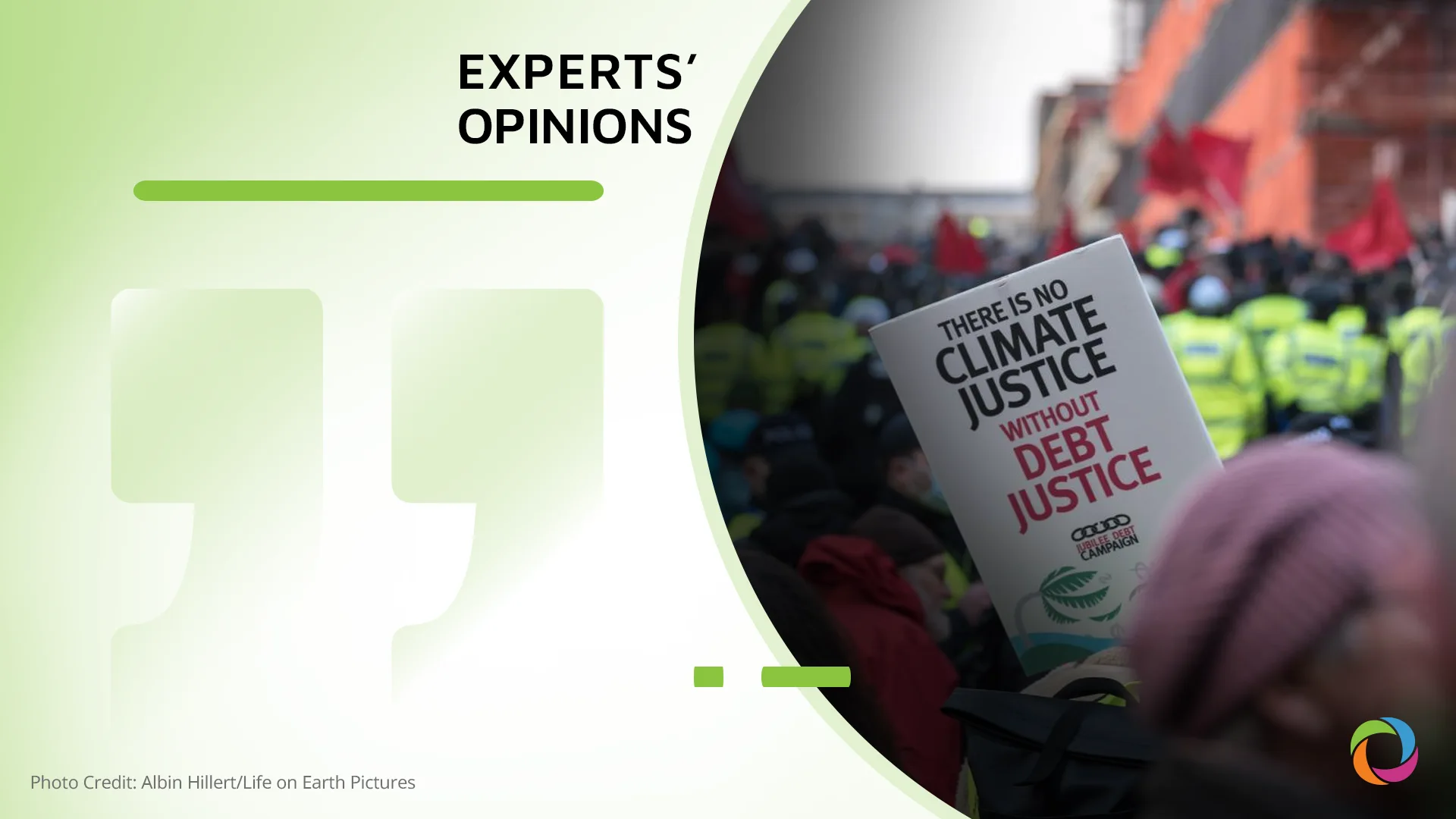
The question, “to cancel or not to cancel debt for the most vulnerable countries”, is certainly not in its first year of debate. However, in the summer of 2025, the conversation around this topic was reignited during a Vatican-led town hall on global development. The event emphasized that countries in the Global South should not have to choose between paying their debts and surviving. With over 3.3 billion people living in countries where debt servicing exceeds public investment in health, education, or climate adaptation, debt cancellation remains a continuing topic for debate featuring both pros and cons. On the one hand, it could free up financial resources for these countries, allowing them to invest in vital areas and, on the other hand, it could cause creditors to be more reluctant to provide new loans to high-risk countries. Check what other experts have to say in this regard.
Key Takeaways:
- As of mid-2025, global public debt stood at approximately US$102 trillion and rising.
- Debt cancellation should allow beneficiary countries to redirect the resources freed towards structural priorities such as health, education, and environmental transition.
- More traditional donors are redefining their priorities and connecting aid with trade, triggering a risk that the needs of developing countries will be pushed down the priority list.
- Experts suggest that for cancellation to be effective, it must be paired with transparency, strong public financial management, and measurable progress in areas such as health, education, and climate resilience.
DevelopmentAid: Can debt cancellation be structured to support long-term development goals without creating dependency or hindering financial discipline in low- and middle-income countries?

“Debt cancellation must become a transformative, people-centered development strategy – not just a financial fix. How? I suggest a three-pronged approach. Firstly, the creation of an independent people’s institution to ensure transparent oversight. Secondly, the integration of people’s voices into the design and monitoring of debt restructuring, and thirdly, the establishment of a citizen-funded accountability mechanism, where even a modest contribution from individuals (for example, one dollar per person) builds a powerful multi-million-dollar fund. Together, these elements would shift debt relief from top-down negotiations to a democratic process that is rooted in dignity, ownership, and long-term development. In many developing countries, political, judicial, and media institutions often fall short of public expectations, requiring an innovative ‘People’s Accountability Institution’ to fill the gap. By harnessing citizen contributions and public participation, this institution could act as both a fiscal watchdog and a democratic catalyst, revitalizing civic trust and government responsiveness. Ultimately, debt justice must restore both economic opportunity and democratic agency. When citizens are informed, involved, and invested, debt relief becomes a catalyst for lasting impact – aligning financial discipline with public aspirations, and turning economic restructuring into a foundation for inclusive, resilient development.”

“Debt cancellation constitutes a strategic lever for sustainable development, provided it is designed as an equitable partnership based on shared responsibility. It should allow beneficiary countries to redirect the freed resources towards structural priorities such as health, education, and ecological transition, while strengthening mechanisms for budgetary transparency and citizen participation. The case of Guinea illustrates these challenges well. Although the country benefited from significant debt cancellation in 2012 under the Heavily Indebted Poor Countries (HIPC) Initiative, launched by the International Monetary Fund and the World Bank in 1996, it is now experiencing a progressive increase in domestic debt, a high budget deficit, and a strong dependence on the mining sector. Despite dynamic economic growth, weak fiscal mobilization limits the state’s ability to finance essential services. Considering this, shared responsibility also involves creditors reforming their practices – contractual transparency, the abandonment of onerous clauses, and support for sustainable solutions. It is not just about canceling debt, but about rebuilding a more resilient, just, and sovereign economic trajectory for countries like Guinea.”

“The debt crisis is the result of local corruption and irresponsible lending. There have been various attempts to solve the debt crisis that 50 low and middle–income countries (LMICs) face. Some of the attempts were successful (the 2010 UK Debt Relief Act, the Heavily Indebted Poor Countries Initiative of the IMF and the World Bank) while others were not (the Common Framework of the G20). A new initiative, the UK’s 2024 proposed Debt Relief Bill, is expected. The whole issue comes down to debt cancellation vs debt restructuring. Debt cancellation should be accompanied by measures of improving public finance management, enhancing tax collection, and adopting fiscal rules, as well as implementing anti-corruption measures, debt-for-development swaps, and temporary payment freezes. Also, the World Bank Debt Sustainability Analyses determine the scale of cancellation needed. Debt restructuring involves renegotiating the terms of the debt, extending repayment periods, reducing interest rates, and ‘haircuts’ (reducing the amount owed). Before any decision is made, countries should be required to demonstrate good performance under IMF and World Bank programs. Transparency is also required from public and private creditors. The issue of interest rates from private lenders to LMICs should be discussed. Between 2008 and 2021, LMICs were paying an interest rate of 5%-11% when western governments could borrow at 0%-3%. In my opinion, the concept of debt restructuring should be chosen for reasons of global financial stability since experience shows that reducing the immediate burden of debt leads to various ‘moral hazards’, including corruption.”

“Debt cancellation can effectively support long-term development in low- and middle-income countries if carefully structured to encourage accountability and avoid dependency. Relief should be conditional on measurable progress in key areas such as health, education, and infrastructure, with strong public financial management and transparency requirements. Funds saved through debt cancellation must be redirected toward productive investments that will stimulate inclusive economic growth, such as renewable energy, digital connectivity, and climate adaptation. To maintain financial discipline, debt relief should be paired with debt sustainability frameworks, technical assistance for debt management, and safeguards such as crisis-contingent clauses that prevent future distress. Involving regional institutions for peer review and aligning relief with country-led development strategies can further ensure responsible use and local ownership. By focusing on building institutional capacity, economic resilience, and sustainable development, debt cancellation can become a catalyst for long-term prosperity rather than a recurring necessity.”

“As (geo)political, economic, environmental, and of course humanitarian crises evolve, affecting more and more people, global consensus on how to deal with these issues seems to be out of reach. What makes this situation more concerning and potentially more dangerous (compared to those of previous years/decades) is the current situation within the development sector. The major shift in the way aid is provided by the United States is not the only earthquake that has shaken the world. More traditional donors are redefining their priorities and connecting aid with trade. This shift brings a risk of the needs of developing countries being pushed down the priority list and overtaken by somehow loosely defined “mutual interest” and trade partnerships. If receiving less aid (provided in the ‘traditional way’) further increases trade deficits and shrinks their own funds, developing countries can hardly count on development but face increased risks of emerging humanitarian, social and political crises. Exit from this situation will not be easy and will require innovative but also brave decisions. Unlocking the potential of developing countries to finance their development through the cancellation of debt is a measure that has the potential to decrease the temperature of an already steaming hot pot.”
“Debt cancellation should be positioned not as financial relief, but as a strategic instrument for fostering sustainable development. To prevent economic dependency and uphold fiscal discipline, such initiatives must be integrated into comprehensive public finance reforms that promote transparency, accountability, and effective resource management. Enhancing domestic revenue generation through the modernization of public finance systems – including improvements to corporate tax and value-added tax (VAT) administration – is essential. Investment in digital infrastructure, such as e-invoicing and real-time VAT reporting, is a critical step toward minimizing VAT gaps and improving fiscal efficiency. These measures will strengthen economic self-reliance and reduce future dependence on external borrowing. A globally governed, rules-based framework for debt restructuring, ideally under the auspices of the United Nations, should facilitate equitable, timely settlements. Key components must include independent debt audits, enforceable participation from private creditors, and alignment with tax policy reforms such as progressive taxation and green excise initiatives. To sustain momentum and accountability, debt cancellation should be contingent on commitments to fiscal transparency, anti-corruption practices, and alignment with the Sustainable Development Goals. Support from multilateral financial institutions in the form of technical assistance and concessional financing can play a catalytic role. Ultimately, debt relief must be recognized as an instrument of global justice – empowering nations to reinvest in human capital and infrastructure, fortify financial institutions, and actively contribute to a more equitable global economy.”

“Debt cancellation must be restructured not as charity, but as a form of justice. Global income inequality remains stark: the wealth of developed countries has often been built through centuries of exploitation, extraction, and asymmetrical trade relations that sidelined the rights and futures of others. Today, while many low- and middle-income countries struggle to finance basic public services, they are expected to service debts accumulated under often inequitable terms. It is unacceptable that over 3.3 billion people live in countries where debt payments outweigh investments in health or education. To support long-term development without fostering dependency, debt cancellation must be embedded in a global framework that links relief to inclusive growth, climate resilience, and domestic capacity-building. This includes transparency in public spending, support for tax justice, and a rebalancing of global financial governance structures. Developed countries have both the means and the moral obligation to lead this shift, not as benefactors, but as actors taking accountability for a global system from which they have disproportionately benefited. Fair and rules-based debt restructuring is not only urgent, but necessary to restore trust and equity in international development.”

“The renewed and very important global conversation on debt justice, catalyzed by the June 2025 Vatican-led town hall, comes at a critical moment. For many countries in the Global South, the weight of debt repayments has become incompatible with the basic requirements of public investment and human dignity. This is not just a technical issue but has become a moral and developmental imperative for us all. Debt cancellation must be designed to support long-term development goals while preserving financial discipline and national ownership. One viable approach is conditional cancellation, where debt relief is linked not to austerity measures or donor-imposed benchmarks, but to clearly articulated national strategies for health, education, and climate adaptation. These strategies should be developed locally, with transparent public oversight, and linked to measurable outcomes while ensuring local leadership and initiatives. Additionally, international financial architecture must evolve to reward investment in human capital and climate resilience. Debt-for-development or debt-for-climate swaps, overseen by independent accountability mechanisms and grounded in inclusive national planning, can be used to provide debt relief without compromising fiscal credibility. In this context, debt justice must go beyond the question of whether to forgive. It must enable sovereign governments to invest in their future with dignity and accountability. That requires a shift in the mindset of creditors and also their recommitment to the principle that development finance should serve people first, and not financial markets.”

“Debt cancellation must be approached not merely as a financial mechanism, but as a transformative political act – one that redresses historical injustices while enabling low- and middle-income countries, particularly in the Global South, to reclaim economic sovereignty. To avoid reproducing cycles of dependency and top-down conditionality, cancellation frameworks must be rooted in democratic participation, transparency, and long-term development strategies that are anchored in redistributive justice, environmental sustainability, and the decolonization of global finance. As an engaged anthropologist, I believe it is essential that such frameworks be co-designed with the people most directly impacted by debt regimes – particularly civil society actors, climate-vulnerable populations, and historically oppressed communities who disproportionately bear the consequences of austerity and extractive development. As someone from an oppressed caste background and a marginalized region of Sindh in Pakistan, I bring both scholarly and lived insights into how global financial structures intersect with caste, class, and ecological vulnerability. My research among Dalits, landless peasants, bonded laborers, and marginalized women –especially within the caste-bound agrarian and industrial landscapes of Sindh – reveals how debt and austerity are not abstract economic conditions but lived realities that are shaped by dispossession, labor exploitation, and environmental degradation. From open-pit coal mining to water insecurity and flood-induced displacement, debt-fueled growth models often exacerbate structural violence under the guise of development. By centering the ecologies of caste, class, gender, and race and amplifying the knowledge and agency of the oppressed, I seek to reframe the global debt debate through a lens of structural justice, historical responsibility, and grassroots sovereignty.”
See also: How can those most affected by climate change shape the decisions to fight it? | Experts’ Opinions
Much of the aid that comes from donor countries is in the form of loans which, on one hand, foster the development of vulnerable countries but, on the other hand, leave a burden on their shoulders and those of future generations. Efficient loan administration requires good management and expertise, which is why strong candidates are always needed in international development projects. To gain more exposure and visibility, DevelopmentAid offers the Individual Professional Membership, which allows candidates to stand out from the competition, apply directly to tenders or grants for individuals, and access the largest job board in the sector. Moreover, they can check salary trends, access reports, webinars, organization and donor profiles, and much more.