


Add us as your preferred source on Google to see more of our content in Search.
 Add to Preferred Sources
Africa’s textile industry is one of the drivers of economic and social development across the continent, fueled by job creation, tax revenues, and important contributions to national GDP. The textile and apparel sectors employ over 20 million people and contribute almost 1.2% of the continent’s GDP. This is partly due to support from multilateral aid institutions combined with government-backed initiatives.
But at the same time, the enormous amount of waste and pollution generated by fast fashion amid allegations of exploitation and forced labor are driving concerns over the sustainability of the sector’s growth.
See also: Ten initiatives tackling the increasing textile and fashion waste in Africa
In this article, we explore how international aid and government-backed initiatives are advancing Africa’s textile industry and take a closer look at the top 10 countries supported by government-backed programs.
The relationship between the textile industry and development
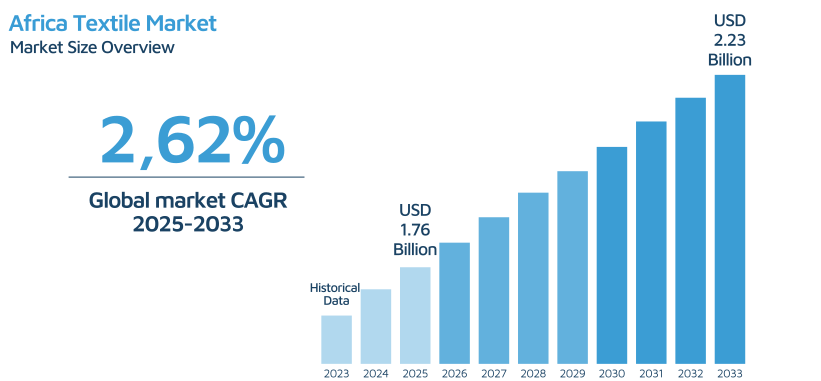
Africa’s textile industry, supported by various development programs funded by multilateral institutions and public-private partnerships, plays a vital role in the socio-economic development of the continent. By establishing industrial parks, introducing tax relief, and enabling the development of the farm-to-fashion value chain, the assistance for the textile sector is driving youth and women employment. One such initiative is the African Development Bank’s Fashionomics Africa, which has trained at least 7,000 fashion entrepreneurs, 4,550 of whom were women. As a result of general investments and support, the industry is predicted to grow from US$1.76 billion in 2024 to more than US$2.2 billion in 2033 (Figure 1).
Figure 1: Africa’s textile market projections as of 2025-2033
Source: Market Data Forecast
In addition, Africa’s textile industry is increasing national tax bases as governments accrue revenue from production and import taxes. In East Africa, since 2024, the member states’ Common External Tariff (CET) has been 35% or US$0.2 per kilogram (whichever is higher) for second-hand clothing and textile imports. Nevertheless, the textile sector is creating new workplaces in labor-intensive fields such as service provision, agriculture, and manufacturing with companies like the Balaji Group, one of the leading manufacturers of clothing in sub-Saharan Africa, having more than 12,000 employees.
But the idyllic picture of the industry’s positive impact also has a less-than-perfect backdrop due to environmental pollution and allegations of child labor with a high number being involved, and forced labor being a common phenomenon.
At the same time, the over-reliance on pesticides in cotton farming is causing environmental pollution that poses health risks to communities.
The darker side of the textile industry and the supply chain that supports it, such as cotton growing, demonstrates the need for regulation, fair labor practices, and environmental policies to ensure sustainable development.
How important is the textile industry to Africa’s GDP?
Africa accounts for over 6% of the global output of cotton, producing more than 1.8 million tonnes annually. Its textile market is growing at a compound annual growth rate of 5%, contributed more than 1.2% of the continent’s total GDP, as of 2025, and employs at least 20 million people across all the connected value chains.
According to data from Wanjietextile, one of the largest manufacturers in Africa, as of 2025, 15% of Africa’s workforce employed in the manufacturing sector work in the textile industry, with the majority coming from Kenya, Ethiopia, and Lesotho. The continent’s textile and fashion market was valued at over US$70.6 billion in 2024, and it is estimated this will grow to roughly US$89 billion by 2029 due to urbanization and a growing middle class. This growth will boost the continent’s GDP by increasing exports, creating more jobs, and accelerating industrial output across African nations.
Top 10 African nations with multilateral or government-funded programs in the textile industry
 Egypt: The nation remained at the top of Africa’s textile market, accounting for an approximate 18.5% market share in 2024. The nation produces almost 4,000 tons of high-quality long staple cotton, accounting for almost 20% of the world’s output, and exports this to international markets. Such high production levels are due to government-aided initiatives like the development of industrial zones and export incentives to create a competitive advantage against other nations.
 Ethiopia: A key player in the global textile market due to government-backed industrial parks, land availability for cotton farming, and a large workforce. In 2022, industrial parks like Hawassa employed at least 25,000 people and accrued over US$165 million in exports. The UNIDO initiative, through partnership, supported textile industrial parks and value-chain growth and created more than 50,000 jobs and at least US$1.2 billion in textile industry investment.
 South Africa: This nation produces synthetic and blended fibers for the medical, automotive, and defense industries. Production is supported by the Clothing and Textile Competitiveness Initiative, which has invested at least US$220 million in South Africa’s textile industry since 2020.
 Kenya: This nation’s textile sector focuses on home textiles and exports through the African Growth and Opportunity Act. According to the Kenya Association of Manufacturers, the textile industry contributed over US$1 billion to the Kenyan economy in 2023 and created over 60,000 jobs. The industry continues to grow by hosting events such as Safaricom Fashion to promote local designers and locally produced fabrics.
 Nigeria: Despite growing imports of textile products (in January-September 2025, the country’s textile imports increased to US$570 million, representing more than a 47.43% increase), Government-aided initiatives like the Planet 3R Social Enterprise Initiative and the Garment & Textile Cluster Growth Support Scheme support cotton farmers and garment manufacturers to produce textiles and apparel for the domestic market to reduce imports.
 Ghana: The nation’s garment sector is valued at approximately US$400 million, but despite its size, more than 70% of textiles and garments are imported. The Association of Ghana Apparel Manufacturers is increasing its efforts to change public policy and increase government procurement of locally manufactured garments to reduce imports.
 Rwanda: The value of Rwanda’s textile and apparel output expanded from roughly US$23.5 million in 2017 to approximately US$106 million in 2024. Government- and donor-aided initiatives such as the Aguka Ideation Programme provide Rwandan youth entrepreneurs with mentorship and seed capital to launch innovative fashion and apparel businesses.
 Benin: This country is among the top cotton-producing nations in Africa, producing approximately 669,000 tonnes in the 2024/2025 FY. Increasing support for local programs is expanding women-led SMEs in the textile industry. For instance, the Benin Fiber Focus initiative supports female entrepreneurship through technical support, financing, and improving business growth.
 Morocco: This nation accounts for a significant share of Africa’s textile market due to its skilled labor force and its strategic location with proximity to European markets. These advantages are coupled with government-aided and donor-funded programs that enhance the growth of the textile industry. For example, the GTEX program helps the nation’s textile sector to shift to greener practices to comply with EU regulations on textile manufacturing.
 Tanzania: This nation exported roughly US$337 million worth of textiles in 2023 to become the 80th largest exporter in the world. The Textile Development Unit – a government-backed program – provides incentives and streamlines investment processes.
Wrap up
Africa’s textile industry is accelerating sustainable development on the continent through job creation, taxes, exports and contributions to national GDPs. However, achieving sustainable growth in the textile industry requires concerns about labor exploitation and environmental pollution from fast-fashion waste to be addressed.