
Add us as your preferred source on Google to see more of our content in Search.
 Add to Preferred Sources
Key reasons to read this article
- Behind today’s billion-dollar donations lies a century-old model of giving that gradually reshaped societies.
- The never-written history of philanthropy was led by women whose names were often left out.
- If philanthropy is about impact, not ego, women have been doing it right all along. So why were they overlooked?
- From 19th-century reformers to modern billionaires, this is the untold story of how women transformed philanthropy by redefining power itself.
When MacKenzie Scott announced in December 2025 that she had distributed US$7.17 billion across 186 grants in a single giving round, unrestricted and unconditional, most headlines focused on the scale. What drew far less attention was the model itself and the long, largely invisible tradition of women’s philanthropy that it reflects.
Scott has written on her Yield Giving platform that she thinks about ripple effects rather than dollar totals. That instinct, to de-center the donor, prioritize the community, and let money flow without strings, is not new. It is arguably rooted in long-standing traditions of women’s giving.
A history written in invisible ink
The standard history of philanthropy is largely a history of men with their names on buildings: Carnegie, Rockefeller, Ford, Gates. What it consistently omits is that women were funding structural and social change, from abolitionist networks and suffrage campaigns to mutual aid societies that underpinned early welfare systems.
Nowhere is this more concrete than in the story of Mary Elizabeth Garrett. In 1890, when Johns Hopkins University’s planned medical school faced a US$500,000 funding shortfall, Garrett led a national Women’s Medical Fund campaign, contributing more than US$300,000 of her own fortune, and made her condition plain: women must be admitted on the same terms as men. The trustees agreed. In October 1893, Johns Hopkins became the first coeducational graduate medical school in the United States, setting standards later reinforced by the Flexner Report of 1910.
Alan Chesney, dean emeritus of the Johns Hopkins School of Medicine, wrote in his institutional chronicle that Garrett was “more than any other single person, save only Johns Hopkins himself,” responsible for the school’s existence. And yet her name remained largely absent from the mainstream philanthropic narratives.
The pattern was not limited to the West. Across Africa, women have long mobilized resources through informal savings groups, faith-based networks, and family support systems, yet this giving has existed outside formal recognition.
The reason is structural. Women who gave through religious institutions were rarely recorded independently. Those who gave within households did so anonymously or in their husbands’ names. Mutual aid work was often labelled as voluntarism rather than philanthropy and excluded from the official records.
Do women give differently?
Three decades of research from the Women’s Philanthropy Institute at Indiana University suggest that, on average, women give both more and differently.
Women are more likely to give than men across most income levels. A US$10,000 increase in a woman’s income raises household charitable giving by about 5% compared to 3% for men. Single women also tend to give more than single men.
Australia’s She Gives February report reinforces this pattern, noting that 60% of women in households report being primary decision-makers in giving.
But the key distinction is not just how much women give, but how and why.
Women tend to favour trust-based philanthropy: unrestricted funding with fewer reporting requirements. Scott’s model reflects this pattern at scale.
Research also suggests differences in motivation; the evidence is compelling and specific. The Social Science Research study by Stanford sociologist Robb Willer and colleagues found that women’s giving is more often linked to empathy, while men’s giving correlates more with reputation, influence, and the strategic benefits of institutional association.
Women are also more likely to give collectively. Giving circles, which collect donations to fund shared priorities, are 84% majority women and mobilized more than US$3.1 billion in the United States between 2017 and 2023 alone, according to the Johnson Center for Philanthropy’s 2024 landscape survey.
When women control household giving, funds are more likely to support health, youth, family services and international causes, while men are likely to fund education and religion. Yet the causes closest to women’s lives remain underfunded. For instance, giving to organizations backing women and girls still represents just 2.04% of overall US charitable giving, according to the Women’s Philanthropy Institute’s 2025 Women and Girls Index.
However, researchers caution against overstating gender alone. A 2005 study of Evangelical Christian donors found that when it came to motivations for giving, “worldview played a significant role” and was “a stronger factor than gender.”
The coming transfer, and its limits
What gives this moment significance is the scale of wealth redistribution ahead. Cerulli Associates estimates that US$124 trillion will be transferred through 2048, with US$105 trillion to heirs and US$18 trillion to charitable causes. Bank of America’s research suggests women will inherit roughly 79% of this wealth.
The question is whether philanthropy is ready. Altrata’s research indicates that engaging women philanthropists requires shifts away from transactional appeals towards values alignment, less emphasis on sustaining operations, and more focus on how resources can tangibly affect change.
At the same time, disparities remain stark. Research by the Black Feminist Fund has found that only 0.1% to 0.35% of global foundation funding reaches Black women, girls, and gender-diverse groups, highlighting irregularities within philanthropy itself.
Five visions for the next chapter
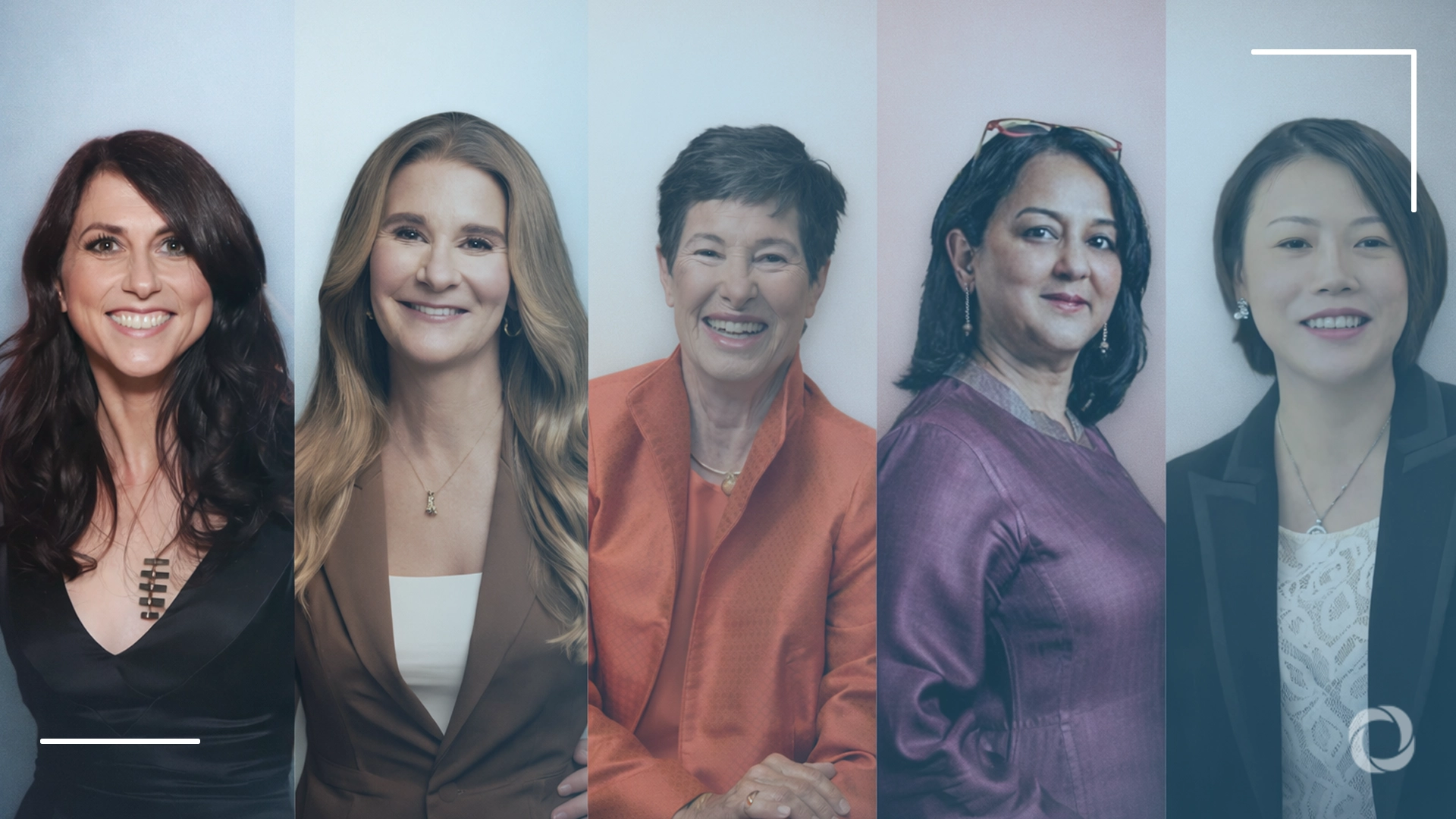
For much of history, women who gave were not named. Their contributions flowed through institutions, families and anonymous campaigns. This Women’s History Month, we name five women who have not waited for recognition to do the work.
MacKenzie Scott, founder of Yield Giving, has given more than US$26 billion to 2,700 organizations since 2019 through large, unrestricted grants. Her work focuses on equity and justice, education, environment, funding, and regranting and has helped bring trust-based philanthropy into the mainstream.
Melinda French Gates, through Pivotal, has committed US$1 billion to advancing women’s power globally. Her funding has prioritized community-based organizations, gender equality, maternal, mental, and physical health, and global development.
Yang Huiyan donated 55% of her personal stake in her property management company, valued at about US$826 million, to the Guoqiang Foundation in Hong Kong. The funds support education, healthcare, and rural development across China.
Lyda Hill has committed her entire estate to philanthropy, including more than US$60m in promoting women in science, aiming to shift representation in public spaces and education.
Rohini Nilekani donated approximately US$24 million in the 2025 financial year alone, bringing her cumulative five-year giving to US$81.9 million across water, sanitation, climate resilience, independent media, and gender equity.
What these women share is not just wealth. It is a theory of change, one that centers communities, trusts local knowledge, and measures success by durable impact. MacKenzie Scott did not invent that approach. Mary Elizabeth Garrett practiced it in 1893. The difference now is scale. The question is whether the systems designed to receive this wealth are ready for it.