

Add us as your preferred source on Google to see more of our content in Search.
 Add to Preferred Sources
Key reasons to read this article:
- Gain critical insights into why owning the world’s most coveted underground minerals matters very little if global innovation outpaces the capacity to build factories.
- Explore the stark contrast between the DRC’s reliance on a defensive raw mineral monopoly versus Morocco’s anticipation of tech horizons leading to the building of a manufacturing ecosystem.
- Learn how Morocco has turned the U.S.-China trade war to its advantage, attracting billions in investments.
- Discover how erratic political cycles are causing the DRC’s strategic leverage to vanish.
Africa built its ambitions for a strategic entry into the multibillion-dollar electric vehicle (EV) industry on mineral dominance. But, as automakers rapidly pivot toward cheaper, cobalt-free batteries, a sharp divergence is emerging on the continent. The green transition has fractured into two distinct industrial strategies and two starkly different outcomes.
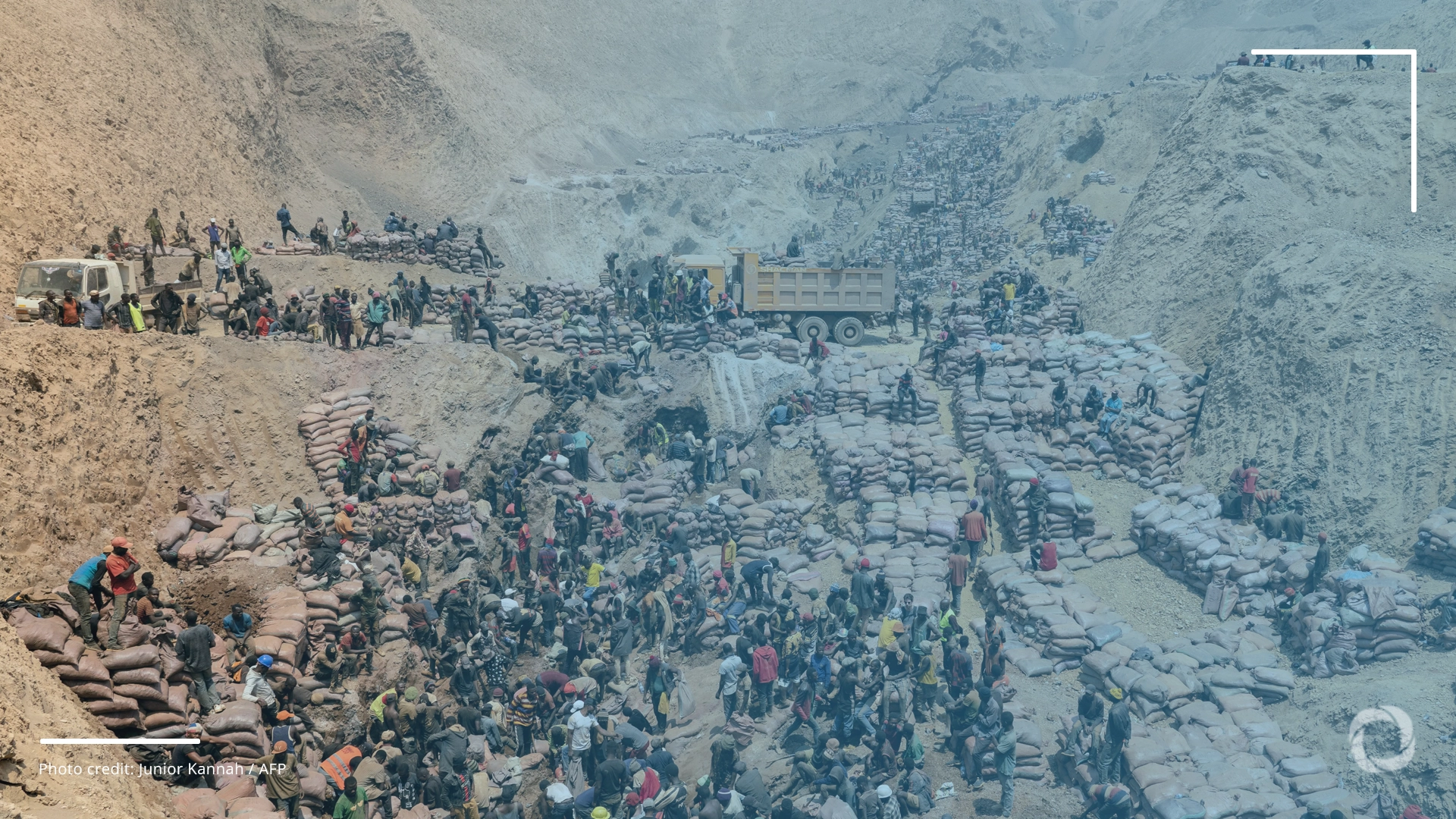
In Central Africa, the Democratic Republic of Congo (DRC) has relied on raw mineral leverage, assuming its control of over 70% of global cobalt would force the world to arrive on its manufacturing doorstep. Meanwhile, in North Africa, Morocco anticipated the technological horizon, leveraging its phosphate reserves to integrate seamlessly into the rapidly rising lithium iron phosphate (LFP) supply chain.
As the market shifts, the contrast is stark. While Morocco prepares to launch full-scale battery production, the DRC’s cobalt-anchored strategy risks stalling before it can ever transform into genuine industrial power.
The fall of the DRC’s cobalt-leverage model
For years, the economic geography of the EV revolution seemed to favor Central Africa. In 2022, the DRC and Zambia signed a historic agreement to develop a cross-border battery value chain. This strategy rested entirely on one assumption: that cobalt would remain the indispensable anchor of the future of EVs.
That assumption has been turned on its head by technological substitution. Driven by a need to cut costs and eliminate exposure to volatile pricing and environmental concerns in the DRC, automakers have aggressively shifted to LFP batteries, a cheaper cobalt-free chemistry.
The share of the global EV market has surged from roughly 10% in 2020 to nearly 50% by 2025, with a 65% projected market share by 2029. Tesla has confirmed that nearly half of its vehicles now use LFP batteries. Chinese giant BYD has built its global expansion around LFP chemistry. Ford and Volkswagen are increasingly deploying LFP batteries in entry-level EV models.
According to the International Energy Agency, the growing adoption of LFP has already reduced the projected cobalt demand for batteries by more than 10% compared with earlier forecasts, while cobalt intensity in battery demand has dropped by two-thirds since 2020.
Yet, the danger for the DRC is not that cobalt demand disappears altogether. It is projected to remain vital for premium, long-range vehicles through the 2030s at least. The problem is that cobalt has lost its indispensability. When a mineral can be engineered out of a supply chain, the political leverage of the country producing it evaporates.
As rapid technological shifts are already reducing global reliance on cobalt, the DRC’s window for global political influence is closing before it can even open having been neutralized by stalled development initiatives.
DRC’s and Morocco’s contrasting approaches
The DRC treats mineral wealth as political leverage, which, according to African Security Analysis, keeps investors away since “geological and financial risks are now inseparable from institutional and political risks.”
Morocco, on the other hand, treats mineral wealth as an industrial baseline. Holding approximately 70% of global phosphate reserves, Morocco has positioned itself as a hyper-connected manufacturing hub rather than attempting to challenge global manufacturing giants or restrict raw exports defensively.
This stance, a report by the Stimson think-tank noted, has turned the country from being “a buffer state” into “a proactive regional actor and stable anchor at the crossroads of Europe and Africa”.
That contrast is becoming increasingly difficult to ignore. While Morocco is attracting investment into higher-value processing and manufacturing, the DRC, despite holding one of the world’s most strategic minerals, still exports most of its cobalt in raw or minimally processed form.
Nevertheless, the divergence cannot be explained by policy choices alone. Morocco’s integration into European industrial networks, combined with political stability and established manufacturing capacity, has given the country advantages that the DRC does not possess. The DRC’s dependence on extractive exports is rooted not only in strategy but also in decades of conflict, weak infrastructure, and institutional fragility.
The Chinese-Moroccan alliance
Morocco’s success lies in its understanding of the new geopolitical reality. China currently controls roughly 98% of global LFP cathode production. Western automakers desperately want to scale LFP manufacturing to lower EV prices, but, as analysts at Roland Berger estimate, they remain four years behind Chinese producers in scaling LFP manufacturing.
Morocco has solved this equation by acting as the ultimate bridge. By utilizing its Free Trade Agreements with both the United States and the European Union, Morocco has invited massive Chinese joint ventures to its shores.
Now Chinese battery giants and material manufacturers are pouring billions into Moroccan industrial zones, seeking to diversify production geographically and maintain access to Western markets, while giving the country the proprietary technology, capital, and technical know-how required to scale advanced manufacturing.
This strategy is already yielding tangible results. Moroccan gigafactory and precursor projects are actively on track to begin production in late 2026, positioning the country as a primary supplier to Europe’s EV industry.
Lessons in 21st-century resource management
The unfolding reality offers a critical lesson for resource-dependent nations across Africa:
- Monopolies are temporary, a fact highlighted by economist Joseph Schumpeter back in the middle of the 20th century. In the modern industrial era, excessive reliance on a single, highly scrutinized mineral triggers technological displacement.
- The value is in the processing, not the soil. Mining raw ore offers minimal economic insulation. True economic resilience is built through infrastructure, predictable regulatory environments, and strategic international partnerships.
The green transition was heralded as Africa’s opportunity to break away from a history of resource exploitation. Morocco’s proactive integration into the LFP ecosystem shows that moving up the global value chain is entirely possible. However, the stalled projects in the DRC serve as a stark reminder that holding the world’s most coveted minerals matters very little if global innovation outpaces the capacity to build the factories.