

Add us as your preferred source on Google to see more of our content in Search.
 Add to Preferred Sources
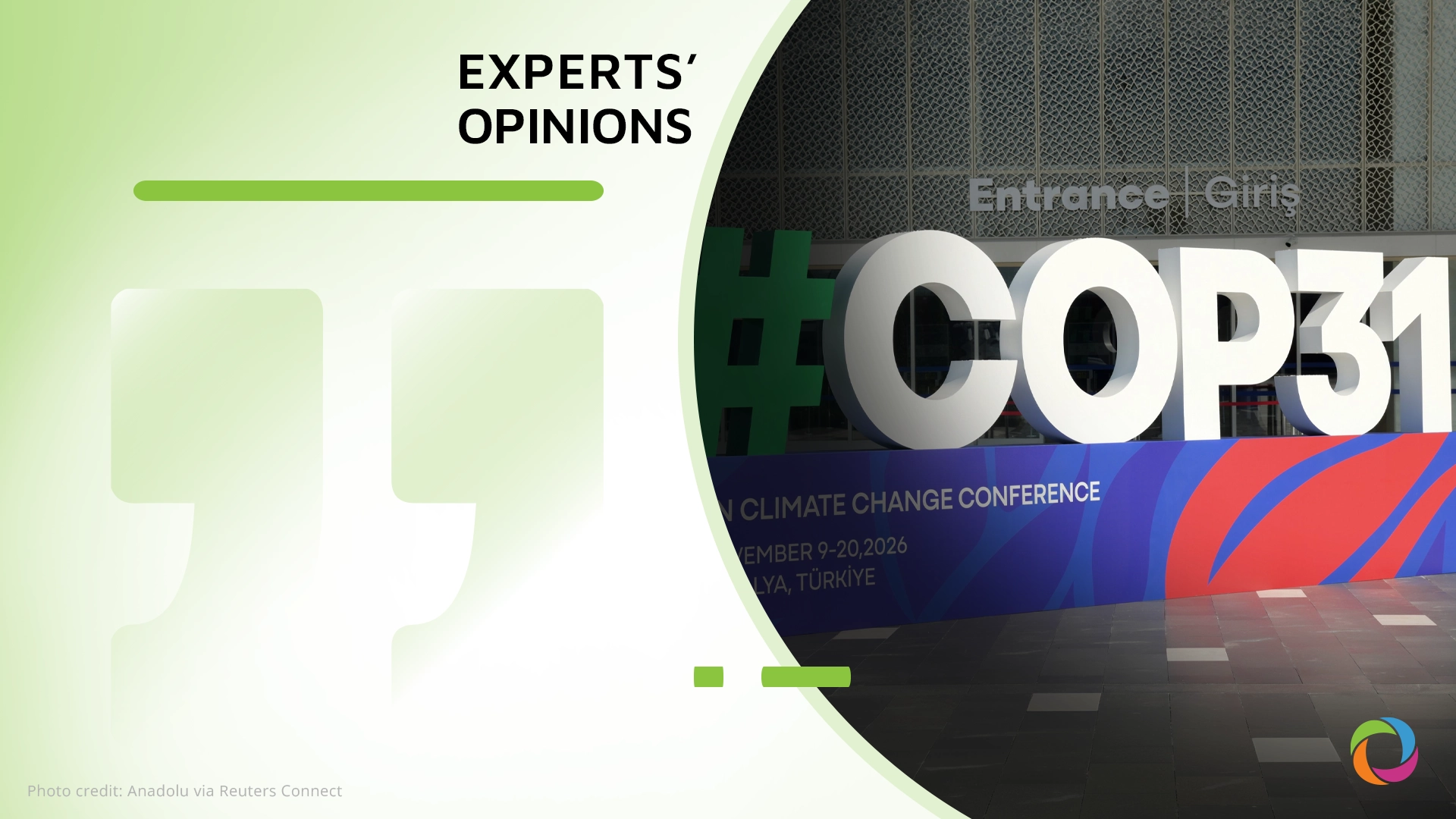
In 2025, the 30th United Nations Climate Change Conference, COP30, concluded in Belém with modest promises and only a few significant initiatives. The main outcomes revolved around the urge to triple funding for climate change adaptation by 2035; the creation of an international mechanism to support workers and communities affected by the energy transition; and the adoption of indicators to measure progress. The major expectation of the COP–more drastic actions for achieving fossil-fuel phase-out–was not met. This year, the world prepares for COP31 to take place between November 9 and 20 in Türkiye. As temperatures continue to rise, and extreme weather events take away thousands of lives and billions of dollars in damage, and vulnerable populations suffer from climate change, many are wondering about the effectiveness of climate negotiators in delivering tangible results.. We considered this an opportune moment to ask climate and environmental experts about the expected outcomes of the upcoming event.
Key Takeaways
- COP31 will take place in Antalya, Türkiye, from November 9 to 20, 2026, bringing world leaders together to accelerate climate action, strengthen international cooperation, and turn climate commitments into measurable results.
- Referring to the previous COPs, experts mention the institutional framework for global cooperation as the most significant achievement.
- The main unresolved challenges are the finance gap, fossil fuel phase-out, and operationalizing the Loss and Damage Fund.
- Phasing out fossil fuels and accelerating the transition to renewable energy are essential to limiting global warming to 1.5°C.
DevelopmentAid: Looking back at previous COPs, what have been the most significant achievements, and to what extent have these commitments translated into tangible progress in addressing climate change?

Multifaceted expert
The most significant achievement has been the institutional framework for global cooperation. COP3 (1997) produced the Kyoto Protocol, the first binding targets for developed nations. COP21 (2015) delivered the landmark Paris Agreement, committing 195 countries to limit warming to well below 2°C and pursue 1.5°C, with Nationally Determined Contributions (NDCs) and a five-year ratchet mechanism. COP26 created the Glasgow Climate Pact, with the first explicit mention of phasing down coal, and COP27 established a Loss and Damage Fund. In terms of tangible progress, these agreements have driven momentum: over 90% of global GDP is now covered by net-zero targets, renewable energy costs have fallen dramatically, and transparency frameworks exist. However, the implementation gap is stark. Global temperatures rose to 1.55°C above pre-industrial levels in 2024. Current NDCs still put the world on a 2.5-2.9°C trajectory. The promised US$100 billion per year in climate finance for developing nations was only met in 2022, two years late, and is largely made up of loans, not grants.

Independent Researcher
and Climate &
Agriculture Specialist
One of the most significant achievements of the COP process has been strengthening international climate cooperation. The 2015 Paris Agreement established a shared framework for countries to limit global warming, reduce emissions, and strengthen adaptation. International negotiations have helped raise ambition and improve the outlook for future warming compared with earlier projections. However, current trajectories remain insufficient to meet the Paris Agreement’s goals. The main challenge is the persistent gap between commitments and implementation. Announced targets do not automatically translate into adequate emissions reductions, accessible climate finance, or stronger resilience for vulnerable communities. This gap is particularly consequential in conflict-affected countries, where climate risks interact with damaged infrastructure, economic hardship, displacement, and weakened institutions. COPs should therefore be assessed not only by the agreements reached and financial pledges announced, but also by measurable emissions reductions, equitable access to finance, and tangible improvements in communities’ capacity to adapt. International cooperation matters, but its success ultimately depends on whether commitments deliver practical results, especially for those facing the greatest risks with the fewest resources.

Author, Consultant
Humanitarian and
Development Expert
The previous COPs have created good frameworks to address the global climate crisis. The Kyoto Protocol placed limits on greenhouse gas emissions by industrialized nations, and the Paris Agreement in 2015 created a framework for all countries to limit the increase in global temperatures through the use of Nationally Determined Contributions (NDCs) as well as climate finance and transparency frameworks. The Global Stocktake at COP28 set out a pathway to phase out fossil fuels, and COP29 agreed to the new climate finance goal of at least US$300 billion per year for developing countries by 2035, with efforts to scale up to US$1.3 trillion. Although these frameworks are in place, they have fallen short: according to the United Nations Environment Programme’s (UNEP) 2026 Emissions Gap report, we will see an estimated temperature rise of 2.8 degrees Celsius in this century. Further, there is an emissions gap between countries’ climate pledges and national policy. In the case of Africa, we know that it has been disproportionately affected by climate change, according to the IPCC’s 6th Assessment Report. COPs have helped build a diplomatic platform to discuss climate change but should be measured by the amount of emissions reduced, adaptation gains and funds allocated to those most affected.

Senior Environmental
and Social Assessment
Specialist
The COP architecture has undeniably served its purpose as an essential platform for international alignment, establishing a shared diplomatic language and framing long-term climate governance. By codifying broad policy benchmarks and bringing climate considerations into mainstream economic and developmental discussions, these summits have helped orient national strategies toward a common trajectory that would have been difficult to achieve through bilateral channels alone. However, evaluating the actual impact of these commitments reveals a persistent gap between negotiated consensus and implementation on the ground. While the process is adept at generating high-level political declarations, the transition from multilateral policy language to concrete, sectoral action is inherently constrained by national priorities and voluntary compliance. The challenge is not necessarily a lack of diplomatic goodwill, but rather the structural limitations of a consensus-based model that often moves at a slower pace than the operational shifts required across energy, infrastructure and financial systems. Ultimately, past COPs have succeeded in setting a collective direction, even as the translation of those pledges into immediate, measurable outcomes remains uneven across different regions.

Economist, international
trade specialist
In my assessment, COPs have been more successful at organizing international climate cooperation than at securing sufficient emissions reductions. Kyoto introduced binding targets for certain industrialized countries, while Paris established a framework for national commitments and transparency. These institutional achievements matter, but their effectiveness depends on domestic implementation. Tangible progress exists. The International Renewable Energy Agency (IRENA) reports that 692 gigawatts of renewable capacity were added in 2025 alone. According to the OECD, climate finance reached US$136.7 billion in 2024, although the US$100 billion target scheduled for 2020 was achieved only in 2022. Attributing these developments solely to COPs would overstate their influence. More importantly, UNEP’s October 2026 assessment projects approximately 2.8°C of warming under current policies. The verdict is therefore mixed: international cooperation has supported measurable progress, but economic transformation remains inadequate. Diplomatic agreements should ultimately be judged by sustained emissions reductions and the protection they deliver to vulnerable communities around the world.

Project Coordinator,
UCHI- Project:
Greening and Growing
Malawi Programme
The COPs have made progress on NDCs, a bottom-up approach that bridges the policy–implementation gap; on climate finance mechanisms, e.g., the Green Climate Fund; and on loss and damage financing. However, the COPs have not made headway on transitioning from fossil fuels to renewable energy, despite recognition since the 1997 Kyoto Protocol that fossil fuels are the major contributor to greenhouse gas emissions. Unlike the energy transition, these other issues carry lower political cost implications, making consensus easier to reach, even though financial targets remain unmet due to complex funding processes for developing countries.
DevelopmentAid: As COP31 approaches, what are the main unresolved challenges, and what concrete outcomes should be prioritized to ensure meaningful progress in addressing climate change?
Multifaceted expert
The main unresolved challenges are the finance gap, fossil fuel phase-out, and operationalizing the Loss and Damage Fund. Pledges remain unfulfilled and difficult for small states to access. For COP31 to be meaningful, it must prioritize: 1) grant-based, accessible adaptation finance, 2) a clear roadmap to phase out fossil fuels, and 3) a fully capitalized Loss and Damage Fund with simplified access. For Fiji and the Pacific, this is existential. The Pacific faces sea-level rise at twice the global average in some areas. In Fiji, six villages, including Vunidogoloa and Narikoso, have already been relocated due to rising seas, with 42 more identified for relocation by the government. Extreme weather is intensifying – Tropical Cyclone Winston (2016) cost Fiji 30% of its GDP. Yet Pacific nations emit less than 0.03% of global emissions. They struggle to access climate finance due to complex accreditation. COP31 must deliver concrete outcomes: direct budget support for Fiji’s Climate Relocation of Communities Trust Fund, funding for seawalls and water security in outer islands, and compensation for non-economic losses like cultural heritage and fishing grounds. Without this, COP31 will be another round of promises while Pacific islands disappear.
Independent Researcher
and Climate &
Agriculture Specialist
COP31 should prioritize turning climate commitments into accessible finance and measurable adaptation outcomes. Beyond the global climate finance gap, vulnerable countries face institutional and technical barriers that prevent them from accessing available funding and implementing projects effectively. Geopolitical tensions and competing priorities can further complicate international cooperation. Syria illustrates why this matters. Despite its very limited contribution to global greenhouse gas emissions, the country faces significant climate risks while navigating the consequences of prolonged conflict and a fragile recovery. Water scarcity and soil degradation threaten agricultural livelihoods, while conflict-related infrastructure damage and rising production costs compound existing vulnerabilities. COP31 should promote more equitable access to adaptation finance for conflict-affected countries, alongside investment in national expertise and institutional capacity. This includes helping countries develop fundable proposals, navigate international financing mechanisms, and deliver projects effectively. Funding should support integrated approaches to water management, agricultural land restoration, food security, and livelihood protection. Climate justice requires more than financial pledges. It requires ensuring that countries and communities with limited responsibility for global emissions can access the resources and technical support needed to adapt to climate change and pursue sustainable recovery.
Author, Consultant
Humanitarian and
Development Expert
Moving forward, we need to transition from commitments to accessible climate finance and working distribution mechanisms. UNEP states in its Adaptation Gap Report for 2025 that developing countries will need between US$310-365 billion per year by 2035 to adapt. Currently, international public adaptation finance stands at US$26 billion per year (2023). Studies have shown that adaptation finance disbursement to Africa has been low (Savvidou et al. (2021) found that 46% of adaptation finance, disbursed between 2014-2018, was much lower than development finance (96%)). Another study showed that only 8% of African NDCs had enough information to allow tracking of adaptation progress. Therefore, COP31 should focus on making sure that climate finance is available in grant form to those who need it most, increasing finance for loss and damage, access to funds, technology transfer and building local adaptation projects. COP31 should also create milestones that allow us to measure how countries are implementing their NDCs and NAPs at a national budget level. In addition, African governments will need to strengthen their institutions, develop quality project pipelines and have effective monitoring systems in place. COP31 needs to show more than just financial targets; it needs to deliver funds and show impact on the ground.
Economist, international
trade specialist
First, national commitments must become funded sectoral programs with measurable milestones. Implementation alone will not suffice: UNEP estimates that existing commitments would reduce emissions by 11–15% by 2035 compared with 2025, against 45% under its scenario for minimizing the overshoot of 1.5°C. Second, financial targets must translate into identifiable contributions and actual disbursements. Reporting should clearly distinguish grants, loans and private investment, while simplifying access for vulnerable countries. Adaptation and loss-and-damage support should be assessed through tangible outcomes, including safer infrastructure, effective early-warning systems and timely assistance following disasters. I would therefore judge COP31 by funded policies, accessible resources, published results and independent scrutiny. Every commitment should identify a budget, a deadline, a responsible institution and measurable indicators. Credibility will depend on delivery rather than another ambitious declaration.
Senior Environmental
and Social Assessment
Specialist
As COP31 approaches, climate governance faces a clear turning point: the era of setting ambitious targets must yield to the hard physics of implementation. Progress now hinges on tackling three stubborn bottlenecks. First, climate finance needs a structural overhaul. With the New Collective Quantified Goal establishing new baselines, capital must pivot toward non-debt, grant-based adaptation funding for vulnerable economies. Second, policy must reckon with grid realities. Renewable targets remain purely theoretical without massive, targeted investment in power grids, cross-border interconnectors and utility-scale storage. Finally, accountability requires teeth. Enforcing standardized, auditable metrics to track Nationally Determined Contributions is the only way to cut through political greenwashing. If COP31 is to deliver genuine momentum, it must measure success not by the elegance of its text, but by the tangible capital deployed and infrastructure built.
Project Coordinator,
UCHI- Project:
Greening and Growing
Malawi Programme
The lack of commitment to transitioning from fossil fuels to renewable energy is nonetheless central to the continued global temperature rise. Unless this is addressed, rising temperatures, despite other efforts in place, suggest that combating fossil fuel use should be the major focus for achieving the below 1.5°C target. The fear, however, is that because developed economies are largely fossil-fuel based, transitioning may entail a power shift from concentration in a few to broader global coverage, driven by strategic mineral reserves for renewable energy. As the energy transition proceeds, technology transfer and increased funding for developing countries remain unresolved challenges that COP31 must focus on.
See also: Can the Sustainable Development Goals still be achieved by 2030? | Experts’ Opinions
Recently, the EU announced a €390 million investment in 135 new climate and environment projects. For professionals with a strong background in climate, this is a good time to look for new assignments and explore new opportunities. In order not to miss any opening, DevelopmentAid offers an Individual Professional Membership – for members to access all job opportunities in the international development field in a single place. In addition, it gives members the possibility to access tenders and grants for individuals, contact organizations directly, and stay up to date with the latest news and events in the sector.