
Add us as your preferred source on Google to see more of our content in Search.
 Add to Preferred Sources
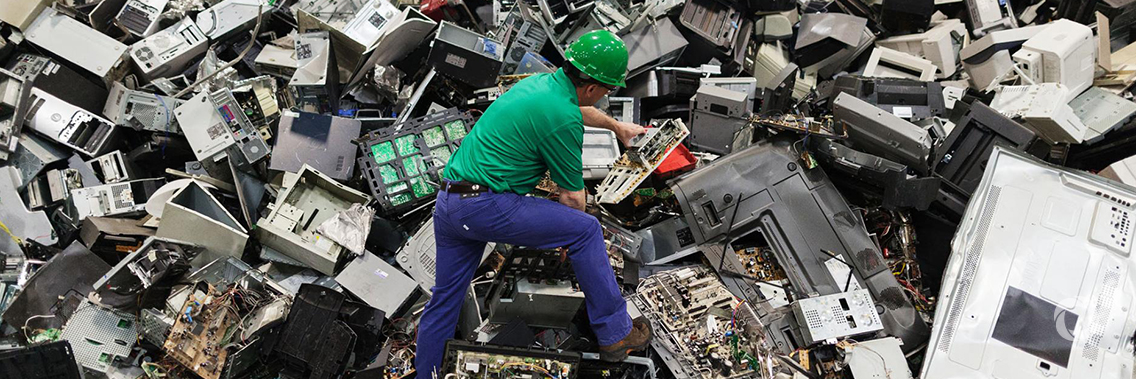
Each year, close to 50 million tonnes of electronic and electrical waste (e-waste) are discarded – the weight of more than all commercial airliners ever made. In terms of material value, this is worth 62.5 billion dollars – more than the GDP of most countries.
Less than 20 percent is recycled formally. Instead, millions of women and men worldwide (over 600,000 in China alone) work informally to collect, repair, refurbish, dismantle, recycle and dispose of e-waste, much of it done in working conditions harmful to both health and the environment.
These are the findings of a new report published by a coalition of seven UN entities – including the International Labour Organization – supported by the World Economic Forum and the WBCSD. The report concludes that it is time to “re-consider e-waste, re-evaluate the electronics industry and reboot the system for the benefit of industry, consumers, workers, the health of humankind and the environment.”
“Thousands of tonnes of e-waste are disposed of by the world’s poorest workers in the worst of conditions, putting their health and lives at risk. We need better e-waste strategies and green standards as well as closer collaboration between governments, employers and unions to make the circular economy work for both people and planet,” said ILO Director-General, Guy Ryder.
If the electronics sector is supported by the right policy mix and managed in the right way, it could lead to the creation of millions of decent jobs worldwide.
It also calls for collaboration with multinationals, small and medium enterprises (SMEs), entrepreneurs, academia, trade unions, civil society and employers’– associations to create a circular economy for electronics where waste is designed out, the environmental impact is reduced and decent work is created for millions.
Original source: ILO
Published on 25 January 2019