
Add us as your preferred source on Google to see more of our content in Search.
 Add to Preferred Sources
Cholera vaccination began as relief efforts continue in the countries affected by Cyclone Idai, Africa one step away from its giant economic project and IOM launched funding appeal to support returning Iraqis. Here is what you missed from last week’s top stories in the international development sector:
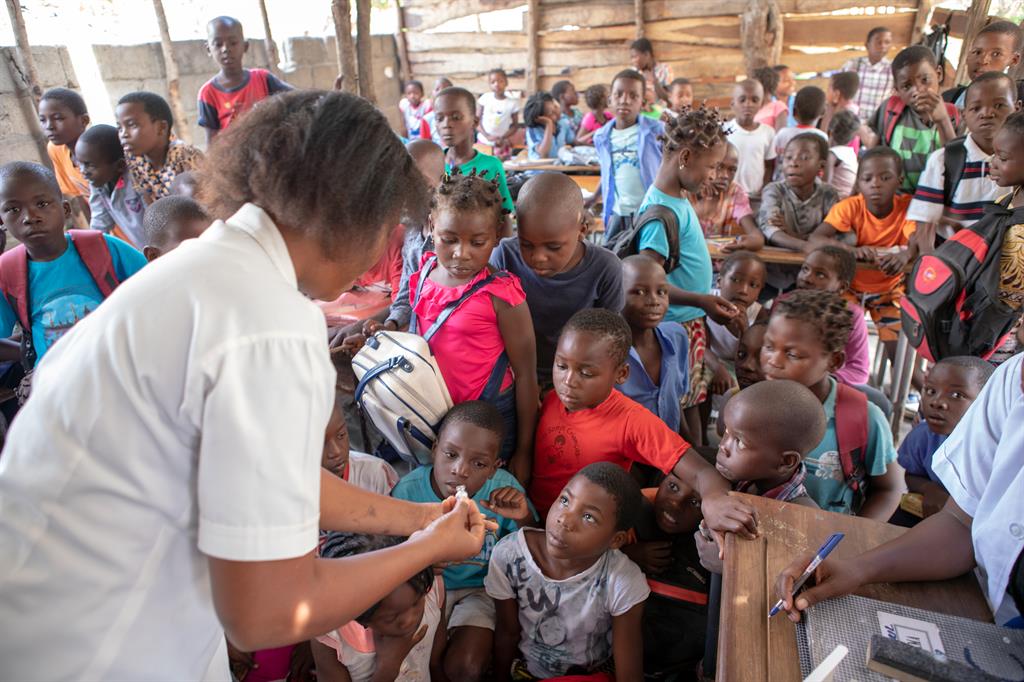
Cholera vaccination campaign begins in Mozambique
An oral cholera vaccination campaign funded by Gavi, the Vaccine Alliance, to protect survivors of Cyclone Idai began in Beira, Mozambique. Following the cyclone, there has already been one reported cholera death and almost 1500 reported cases.
The United Nations and government officials agree that at least 1.85 million people have been affected by Cyclone Idai in Mozambique. IOM is appealing for USD 36.4 million for its emergency response for the next six months. The United Nations is urgently seeking an additional USD 282 million of relief aid over the next three months to 30 June 2019.
Meanwhile, IOM continues relief efforts in Zimbabwe and Malawi. In Zimbabwe, the hardest hit province is Manicaland where Chimanimani and Chipinge districts remain inaccessible due to heavy rains, strong winds, earth sliding which has damaged roads and main access bridges; so far, 181 deaths have been reported. In Malawi, the floods have affected 868,900 people and displaced over 87,000.
As explained by Mpilo Nkomo, IOM Malawi Head of Mission: “There is an urgent need for Shelter as most displaced people are accommodated in camps set up in schools, a situation that is disrupting learning activities in the schools. IOM is appealing for funding support to help provide the much-needed shelter as some families are leaving in the open exposing them to the harsh weather resulting from the flood.”
On the other side, USAID announced nearly $33 million in additional humanitarian assistance for people affected by the cyclone. The new funding will go to the World Food Programme (WFP), which will help nearly 1.5 million people meet their basic emergency food needs for one month. The new assistance will provide both direct food assistance, as well as vouchers.
Amid widespread shortages, the price of food has rocketed in Mozambique. The cyclone hit at the end of the growing season, destroying some 711,000 hectares of crops and leaving farmers with no money to buy new seeds. There is now a real risk of famine in a country that already had one of the world’s worst rates of child malnutrition.
FAO announced that not only farmers but also fishers in the three Southern African countries hit by the cyclone are under severe threat, and declared the response to Cyclone Idai in Mozambique a top priority. The UN agency is asking for an initial $19 million to support those most affected over the next three months, with a focus on resuming local food production, assisting fishing communities and supporting livestock owners.
Among the countries who scaled up efforts in response to Cyclone Idai last week was Canada, who launched a Matching Fund for every donation to Canada’s Humanitarian Coalition and its members between March 15 and April 14, 2019. Moreover, Maryam Monsef, Minister of International Development and Minister for Women and Gender Equality, announced an additional contribution of $4.5 million, focusing on health and food security, to other humanitarian partners responding to the crisis in southern Africa.
In spite of the commitments made by development agencies and countries, UN Deputy Secretary-General Amina Mohammed announced that only $46 million of a $392 million appeal to respond to the crisis unleashed by Cyclone Idai has been provided by the international community to date.
Ebola cases rising in DR Congo
A rise in new cases of deadly Ebola virus disease in eastern Democratic Republic of the Congo (DRC) has been announced, while authorities say that progress is being made in accessing communities that have been wary of outside help, said the UN World Health Organization (WHO).
Latest data indicates a total of 1,029 confirmed and probable cases of Ebola, while 642 people have died, making the latest outbreak of the deadly haemorrhagic fever, which is endemic in the DRC, the worst in the country’s history.
Africa is one step away from the AfCFTA’s entry into force
The African continent is beginning the final stage of its giant economic project: to integrate the 55 African countries and create a common market with a cumulative GDP of $2,500 billion.
“Implementation of the African Continental Free Trade Agreement (AfCFTA) will result in a net gain of $2.8 billion in real income for Africans,” said African Development Bank’s Macroeconomic Policy Director, Hanan Morsy, who estimates that the AfCFTA will lead to a 15% increase in intra-African trade.
IOM launches funding appeal to address most urgent humanitarian needs of returning Iraqis
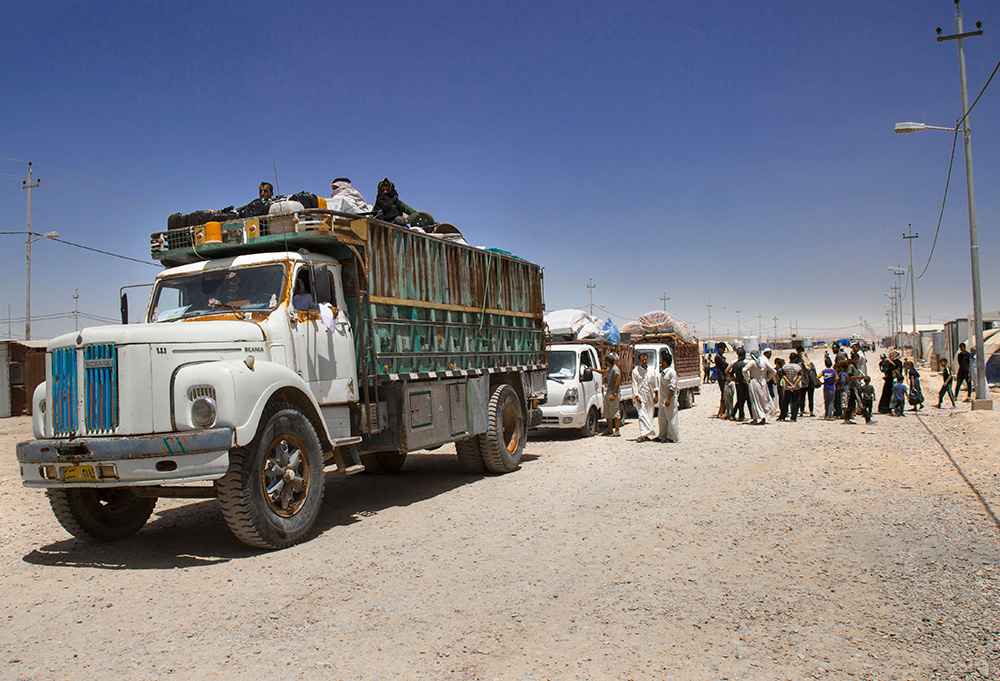
Five years after the onset of the ISIL crisis and the subsequent massive internal displacement, IOM Iraq is launching its funding appeal for emergency assistance in the amount of USD 41.4 million.
Although the number of internally displaced persons (IDPs) has gradually declined since 2015, there are still around 1,750,000 Iraqis living in displacement as of February 2019, due to significant obstacles to a safe return to their homes. IOM’s funding appeal is aligned with the 2019 United Nations’ Humanitarian Response Plan (HRP) for Iraq, which estimates that approximately 6.7 million people are in critical need of support.
Here’s what else happened:
Somalia: The UN Central Emergency Response Fund (CERF) and the Somalia Humanitarian Fund (SHF) have released a combined US$45.7 million to scale up life-saving assistance and reach the most vulnerable in Somalia. To date, the 2019 Somalia Humanitarian Response Plan, seeking $1.08 billion, is only 12 percent funded.
EU Aid: The European Commission has launched a new tool to help stakeholders access and use EU aid data: the EU Aid Explorer. The Explorer includes over one million entries and offers an overview and details of all EU programmes and projects since 2007.
Also, the EU announced €6 million in humanitarian aid to Libya for 2019. The humanitarian assistance will provide access to food, clean water, education in emergencies and basic health care for Libyans most in need. The European Commission has announced, as well, an initial amount of €1.2 million in response to the floods that have recently affected northern and south-western parts of Iran.
Venezuela: UNICEF estimates that as a result of the Venezuela migrant crisis, an estimated 1.1 million children – including children uprooted from Venezuela, as well as returnees and those living in host and transit communities – will need protection and access to basic services across Latin America and the Caribbean in 2019.
As part of the 2019 commitment of humanitarian assistance for the people inside of Venezuela, USAID is pre-positioning humanitarian relief supplies in Curaçao. In January, Secretary of State Mike Pompeo announced that the United States is ready to provide more than $20 million in additional funding to support humanitarian assistance activities inside Venezuela.
Climate change: Last week signaled the start of a EUR 12 million project designed to build the resilience of 15 Pacific countries to threats posed by climate change, which Pacific Island Forum leaders have repeatedly identified as the single greatest threat to the livelihoods, security, and well-being of the peoples of the Pacific.
Ukraine: The Ukrainian national authorities estimate that about 7,000 square kilometers in government-controlled areas of Donetsk and Luhansk are contaminated with landmines but the full extent of the contamination is not clear. UNHCR is calling for increased efforts to address the dangers and legacy of landmines in Ukraine.
Last, but not least, last week saw the global launch of UN Decade of Family Farming 2019-2028 and new UN advocacy campaign – Act to Protect Children Affected by Conflict.
Reports
2019 Financing for Sustainable Development Report: Fight against climate change and poverty will fail without overhaul of global financial system
A major new UN-led report, involving more than 60 international organizations, warns that a comprehensive overhaul of the world’s financial system is necessary if governments are to honor commitments to tackle critical issues.
The 2019 Financing for Sustainable Development Report says that achieving the financing needed to implement the 2030 Agenda for Sustainable Development is not just about finding additional investment but also building supportive financial systems, and global and national policy environments.
Acute hunger still affecting over 100 million people worldwide
The Global Report on Food Crises finds that around 113 million people in 53 countries experienced acute food insecurity in 2018. Nearly two-thirds of those facing acute hunger are in just 8 countries: Afghanistan, the Democratic Republic of the Congo, Ethiopia, Nigeria, South Sudan, Sudan, Syria and Yemen.
European Commissioner for International Cooperation and Development Neven Mimica commented on the launch of the report, saying:
”Today’s Global Report highlights the need for strengthened cooperation between humanitarian, development and peace actors to reverse and prevent food crises,”.
The report, jointly presented by the European Union, the Food and Agriculture Organization of the United Nations (FAO), and the UN World Food Programme (WFP), calls for strengthened cooperation that links together prevention, preparedness and response to address urgent humanitarian needs and root causes, which include climate change, economic shocks, conflict and displacement.
Renewable energy now accounts for a third of global power capacity
The International Renewable Energy Agency (IRENA)’s annual Renewable Capacity Statistics 2019 was published last week, as well. The report, which contains the most comprehensive, up-to-date and accessible figures on renewable energy capacity, indicates growth in all regions of the world, although at varying speeds. “Renewable energy has established itself as the technology of choice for new power generation capacity,” said IRENA Director-General Adnan Z. Amin in regards to the launch of the report.
1 in 4 health care facilities lacks basic water services
WASH in Health Care Facilities – a new report by WHO and UNICEF Joint Monitoring Programme for Water Supply, Sanitation and Hygiene (JMP) – shows that one in four health care facilities around the world lacks basic water services, impacting over 2 billion people. The paper is the first comprehensive global assessment of water, sanitation and hygiene (WASH) in health care facilities.
Also, the World Health Statistics 2019 shows that uneven access to health services drives life expectancy gaps and A Gathering Storm: Climate change clouds the future of children in Bangladesh indicates that devastating floods, cyclones and other environmental disasters linked to climate change are threatening the lives of more than 19 million children in Bangladesh.
Events announced
The Future of Work: Today. Tomorrow. For All.
Brussels, Belgium
9 April 2019
The European Commission is organizing a high-level conference on the future of work, hosted by President Jean-Claude Juncker together with Vice President Valdis Dombrovskis and Commissioner Marianne Thyssen. In six parallel sessions, participants will take an in-depth look at how Europe’s employment and social policies have to change to fit the world of today and tomorrow.
Health and climate change. Taking care of humankind at +2°C
Cannes, Provence-Alpes-Cote D’Azur, France
15-16 April 2019
On the occasion of the Centenary of the foundation of the International Federation of Red Cross and Red Crescent Societies, the Red Cross is organizing the first “humanitarian COP” on climate change and health. The event will examine current and future consequences of climate change on health, explore innovative approaches to face the emerging challenges it brings, and involve citizens and decision-makers at all levels to discuss their role in the prevention, preparedness, adaptation and response to climate impacts.
Climate Action Pacific Partnership Conference
Suva, Fiji
29 – 30 April 2019
Emphasizing the need for urgency as we fast approach 2020, and the actions required to keep the 1.5°C target alive, CAPP III sessions will be framed around the Talanoa Call for Action that was presented at COP24 in Poland last year.
The conference will also be a platform to amplify the voice of Pacific Island Countries in the UN Climate Summit in September this year.
EBRD 2019 Annual Meeting and Business Forum
Sarajevo, Bosnia and Herzegovina
8 – 9 May 2019
This year’s theme of EBRD Annual Meetings and Business Forum is Connecting Economies for Stronger Growth. The event will include a programme of lively debate, talks, and discussion around a variety of themes and major trends, from boosting small business to the effects of migration on labor markets, the opportunities and pitfalls of tourism and the ways to connect the local and regional to the global economy.
UNESCO International Water Conference: Leveraging intersectorality for sustainable water security and peace
Paris, France
13-14 May 2019
The UNESCO International Water Conference aims to advance sustainable water security and peace by leveraging intersectoral management of water resources. Among its objectives is to bring everyone around the table to discuss intersectoral approaches to the governance and management of water resources and to launch a Call for Action to foster, embrace, and adopt intersectoral water management.