
Add us as your preferred source on Google to see more of our content in Search.
 Add to Preferred Sources
Humanitarian aid pours into the countries affected by Cyclone Idai, a new $1 billion facility for green infrastructures in Southeast Asia is launched and the European Commission adopts five new programmes under the EU Trust Fund for Africa. Here is what you missed from last week’s top stories in the international development sector:
Cyclone Idai: More humanitarian aid coming in as appeals to meet humanitarian needs increase
African Development Bank announced a US$100 million comprehensive relief, reconstruction and mitigation plan for Mozambique, Malawi and Zimbabwe. The Bank will be providing emergency assistance to the affected countries and a medium-term plan to meet the reconstruction needs of the affected areas, including a climate risk insurance plan.
In a message to the affected countries, the Bank’s President said: “This natural disaster once more shows the importance of building climate-resilient economies in the African continent.”
The European Union announced an additional €12 million in humanitarian support to the three countries affected by the cyclone, as well. The EU has also contributed with €1 million in support of the WFP-led global Logistics Cluster’s work.
”Logistics are crucial in helping to save more lives and support the post-disaster recovery and reconstruction efforts,” said WFP Mozambique Country Representative, Karin Manente.
On top of that, UK International Development Secretary Penny Mordaunt pledged extra Cyclone Idai funding as she arrived in Washington D.C. for the World Bank Spring Meetings. The new UK funding includes £10 million of humanitarian aid, including food, water, and sanitation facilities. Further funding of up to £4 million will provide emergency education to children caught up in the disaster.
USAID, too, has provided an additional contribution of US$2.5 million to respond to emergency needs in Zimbabwe following Cyclone Idai. The contribution will support immediate food needs in the most affected areas of Manicaland Province. According to a Government of Zimbabwe report from 2 April, 270,000 individuals need assistance across all sectors.
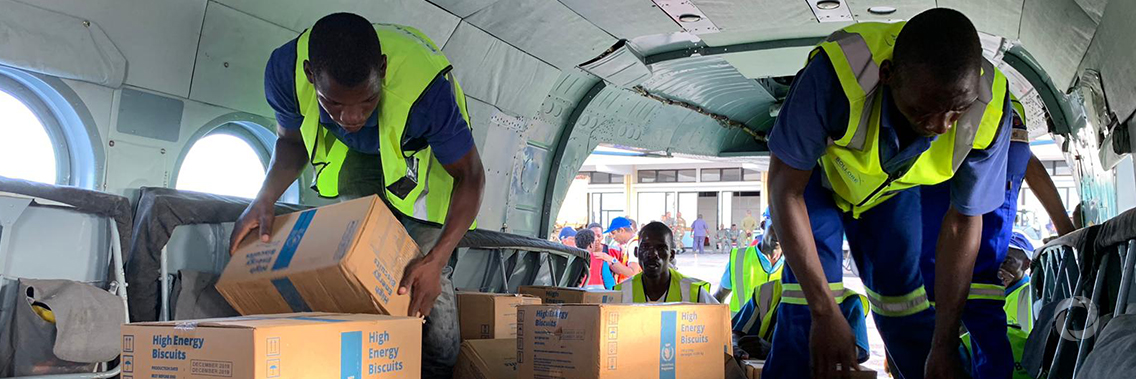
Meanwhile, the International Organization for Migration appeals for USD 7.2 million to meet humanitarian needs in Zimbabwe. IOM’s appeal is planned to be used during the following six months to provide multi-sectoral humanitarian assistance to individuals.
IOM is appealing for funds to scale up its response in the following sectors: Camp Coordination and Camp Management (CCCM); Health; Protection; Displacement Tracking; Mental Health and Psychosocial Support (MHPSS); Early Recovery; Shelter and non-food Items (NFI).
Another regional appeal for humanitarian assistance of US$ 3.2 million was launched on April 11th by the Southern African Development Community (SADC).
UN Refugee Chief urges Security Council for firm response to record-high displacement
In a speech to the UN Security Council in New York, the UN High Commissioner for Refugees, Filippo Grandi, reminded international leaders at the United Nations Security Council of their critical role in finding urgent responses to the displacement crises across the world.
“To portray this as a global crisis that is not manageable, in my opinion, … is wrong,” he said. “With political will, which you represent here at the highest level, [and] with improved responses as they are enshrined in the Global Compact on Refugees, it is possible and urgent to address these crises, and you as Security Council have a critical role.”
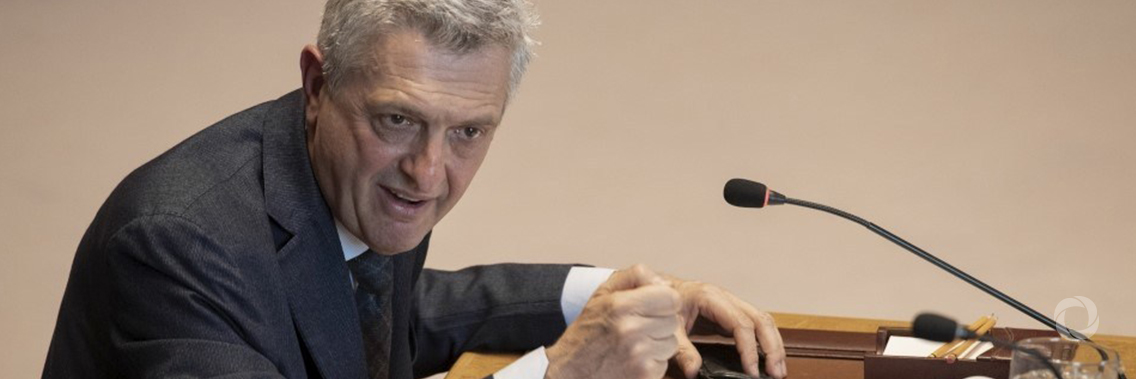
The UN Refugee chief’s address comes at a time when an unprecedented 68.5 million people around the world have been forced to flee. Among them are nearly 25.4 million refugees, over half of whom are under the age of 18.
Five new programmes adopted under the EU Trust Fund for Africa
The European Commission adopted five new programmes and three top-ups of current programmes worth €115.5 million under the EU Emergency Trust Fund for Africa to complement ongoing efforts in the Sahel and Lake Chad region.
“We have witnessed in the recent weeks an increase of widespread violence and terrorist attacks in the Sahel and Lake Chad region. New EU programmes and top-ups to existing programmes worth €115.5 million will further strengthen our actions on the development and security fronts,” explained European Commissioner for International Cooperation and Development Neven Mimica.
Sida, FAO and ECOWAS join forces to protect West Africa’s forests
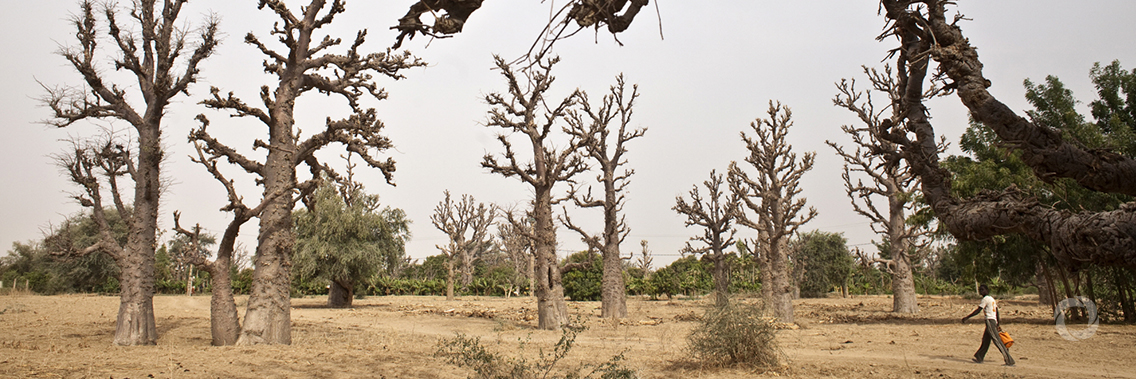
The Swedish International Development Cooperation Agency (Sida), the Food and Agriculture Organization of the United Nations (FAO) and the Economic Community of West African States (ECOWAS) have joined forces to protect West Africa’s forests and help safeguard the livelihoods of millions of people who depend on them.
The three institutions will carry out a 5-year project aimed at strengthening sustainable forest and land management, addressing transboundary forest threats, maximizing the livelihoods of forest-depended communities, and building climate resilience across 15 countries in West Africa.
World Bank and UNICEF partner to promote education
The World Bank and UNICEF announced a new commitment to promote education, skills and training for young people in developing countries with the goal of boosting their employment prospects. The partnership will align $1 billion in World Bank investments with Generation Unlimited, a new global initiative, currently hosted by UNICEF.
1 billion for green infrastructures in Southeast Asia
Agence Francaise de Development (AFD) joined forces with the Asian Development Bank (ADB) to launch the ASEAN Catalytic Green Finance Facility.
The facility is set to improve the financial attractiveness of investing in green infrastructures by reducing the associated risks and promoting the use of private funds. The initiative aims to generate more than $1 billion worth of investments in green and climate-compatible investments in countries belonging to the Association of Southeast Asian Nations.
Here’s what else happened
Venezuelans: Vice President Mike Pence announced that the United States is providing nearly $61 million in additional humanitarian assistance to support the regional response for the 3.4 million Venezuelans who have fled the crisis in their country.
Global warming: At the Korea Global Adaptation Week, UN Climate Change (UNFCCC) Deputy Executive Secretary Ovais Sarmad stressed the need to update current Nationally Determined Contributions in line with the Paris Agreement before the starting implementation date in 2020, given that the most recent UN Environment Emissions Gaps Reports reveal that current national climate action plans will not be enough to hold global warming below 2 degrees Celsius.
Palestine refugees: The Saudi Fund for Development (SFD) is financing large-scale maintenance projects in 268 schools and health centers in Syria, Jordan, Gaza, Lebanon and the West Bank, including East Jerusalem.
Horizon 2020: The European Commission will invest €195 million in setting up and developing ‘centres of excellence’ in seven Member States to help boost research and innovation performance.
Also, the African Development Bank launched the Pan-African Urban and Municipal Development Fund & SADC and the EU jointly launched a €15 million programme to support peace and security in the SADC Region. A new project worth $60-million to reform the artisanal and small-scale mining sector in Mongolia and the Philippines was launched, as well.
Reports
Deep electrification powered by renewables key for a climate-safe future
A new analysis by the International Renewable Energy Agency (IRENA) finds that scaling-up renewable energy combined with electrification could deliver more than three-quarters of the energy-related emission reductions needed to meet global climate goals.
According to the latest edition of IRENA’s Global Energy Transformation: A Roadmap to 2050, pathways to meet 86 percent of global power demand with renewable energy exist. Electricity would cover half of the global final energy mix while the global power supply would more than double over this period, with the bulk of it generated from renewable energy, mostly solar PV and wind.
UNICEF: 175 million children are not enrolled in pre-primary education
Around half of pre-primary-age children globally are not enrolled in pre-primary education, missing a critical investment opportunity and suffering deep inequalities from the start, UNICEF warned in a new report.
A World Ready to Learn: Prioritizing quality early childhood education – UNICEF’s first ever global report on pre-primary education – reveals that children enrolled in at least one year of pre-primary education are more likely to develop the critical skills they need to succeed in school and less likely to repeat grades or drop out of school.
Events announced
The Comparative and International Education Society’s 2019 Conference
San Francisco, CA
14-18 April 2019
The theme of CIES 2019 is Education for Sustainability. A delegation from the Global Partnership for Education Secretariat will attend the conference and present on the latest research and experience.
2019 ECOSOC Forum on Financing for Development
UN Headquarters, New York
15-18 April 2019
The FfD Forum is an intergovernmental process with universal participation mandated to review the Addis Ababa Action Agenda (Addis Agenda) and other financing for development outcomes and the means of implementation of the Sustainable Development Goals.
18th Session of the United Nations Permanent Forum on Indigenous Issues
UN Headquarters, New York
22 April – 3 May 2019
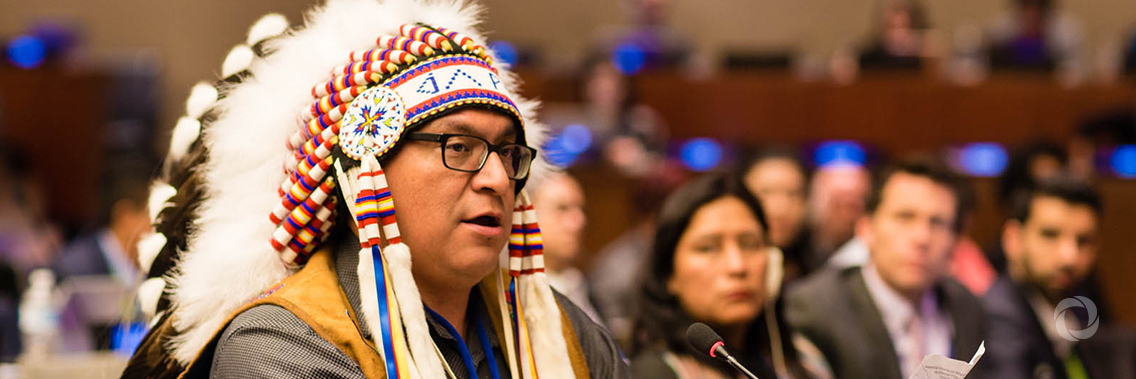
The United Nations Permanent Forum on Indigenous Issues (UNPFII) is a high- level advisory body to the Economic and Social Council and is mandated to deal with indigenous issues related to economic and social development, culture, the environment, education, health, and human rights. The theme of the 18th session is “Traditional knowledge: Generation, transmission and protection”.
The Second Multi-Hazard Early Warning Conference
Geneva, Switzerland
13 – 14 May 2019
The conference is organized by the International Network for Multi-Hazard Early Warning Systems (IN-MHEWS), in conjunction with the 2019 Global Platform for Disaster Risk Reduction with the purpose to highlight the role that national governance plays in implementing and sustaining multi-hazard early warning systems.
MHEWC-II aims to demonstrate to countries how the availability of and access to multi-hazard early warning and risk information can be improved.
Fourth UN Multi-stakeholder Forum on Science, Technology and Innovation for the SDGs (STI Forum)
UN Headquarters, New York
14-15 May 2019
The theme of the STI Forum 2019 is “STI for ensuring inclusiveness and equality, with a special focus on SDGs 4, 8, 10, 13, and 16”. The forum is expected to bring under spotlight technology needs and gaps, including with regard to scientific cooperation, innovation and capacity-building in order to help facilitate development, transfer and dissemination of relevant technologies for the SDGs.
The Global Symposium on Soil Erosion
FAO HQ, Rome, Italy
15-17 May 2019
The theme of GSER19 is ‘Stop soil erosion, Save our future.’ The objective of the symposium is to establish a common platform to present and discuss the latest information on the status of interventions and innovations in the field of soil erosion and related land management.
The event is co-organized by the UN FAO and its Global Soil Partnership (GSP), the Intergovernmental Technical Panel on Soils (ITPS), together with the Science-Policy Interface (SPI) of the UN Convention to Combat Desertification (UNCCD), and the Joint FAO/IAEA Programme of Nuclear Techniques in Food and Agriculture.