
Add us as your preferred source on Google to see more of our content in Search.
 Add to Preferred Sources
Algeria and Argentina have earned WHO certification as malaria-free countries, UN announced measures to strengthen Ebola response in DR Congo and Antonio Guterres stressed the urgency to preserve biodiversity. Here is what you missed from last week’s headlines in the international development sector:
Algeria and Argentina eliminated malaria
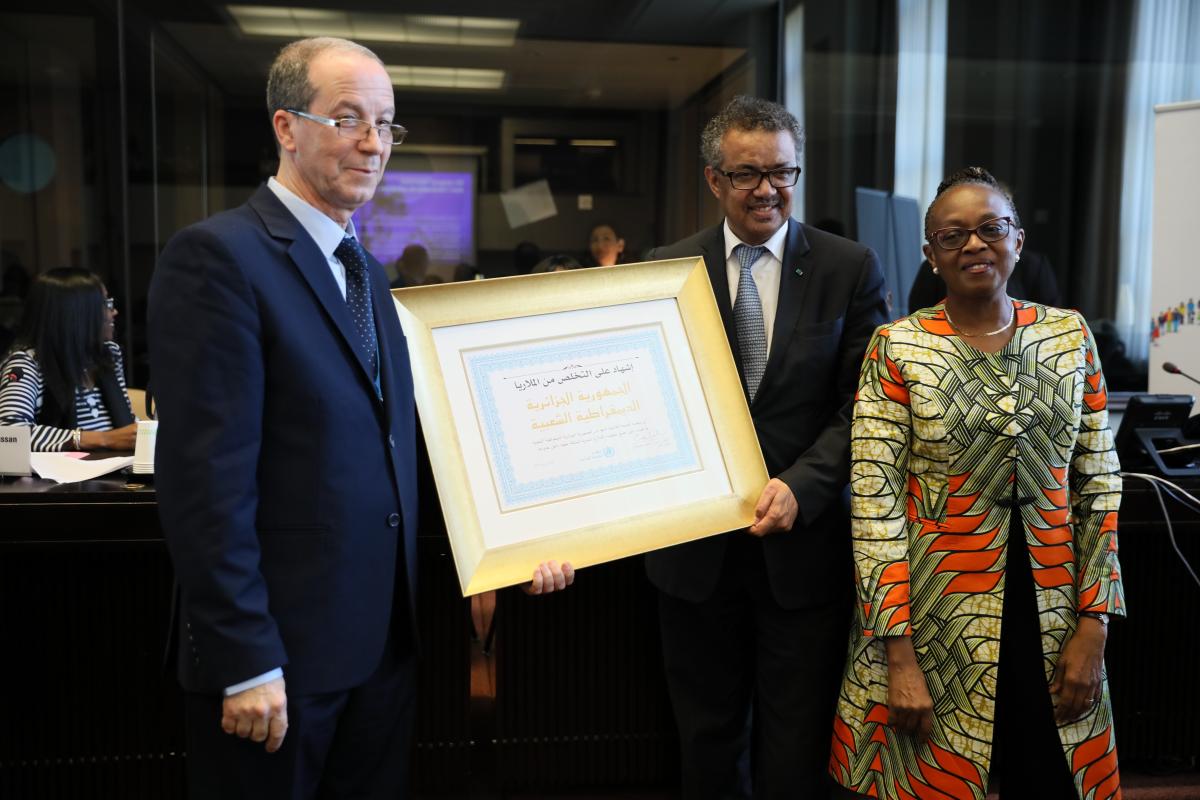
Algeria and Argentina have earned WHO certification as malaria-free countries. The announcement was made during last week’s World Health Assembly in Geneva.
“This is a historic achievement by Algeria and Argentina,” said Peter Sands, Executive Director of the Global Fund. “It demonstrates once again that malaria can be defeated in both Africa and in South America. Ending malaria is demonstrably an achievable goal, but it takes leadership, commitment, and rigorous implementation to make it happen.”
After years of steady decline, malaria cases are on the rise. Mosquitoes in Africa are developing resistance to the most common insecticides used to treat mosquito nets, and the Mekong region is seeing growing resistance to the world’s most successful malaria drug. In the last five years, four other countries have been certified as malaria-free: Maldives, Paraguay, Sri Lanka and Uzbekistan. The number of malaria-free countries now totals 106, outnumbering the 88 countries which remain malaria endemic.
United Nations announced measures to strengthen Ebola response in DR Congo
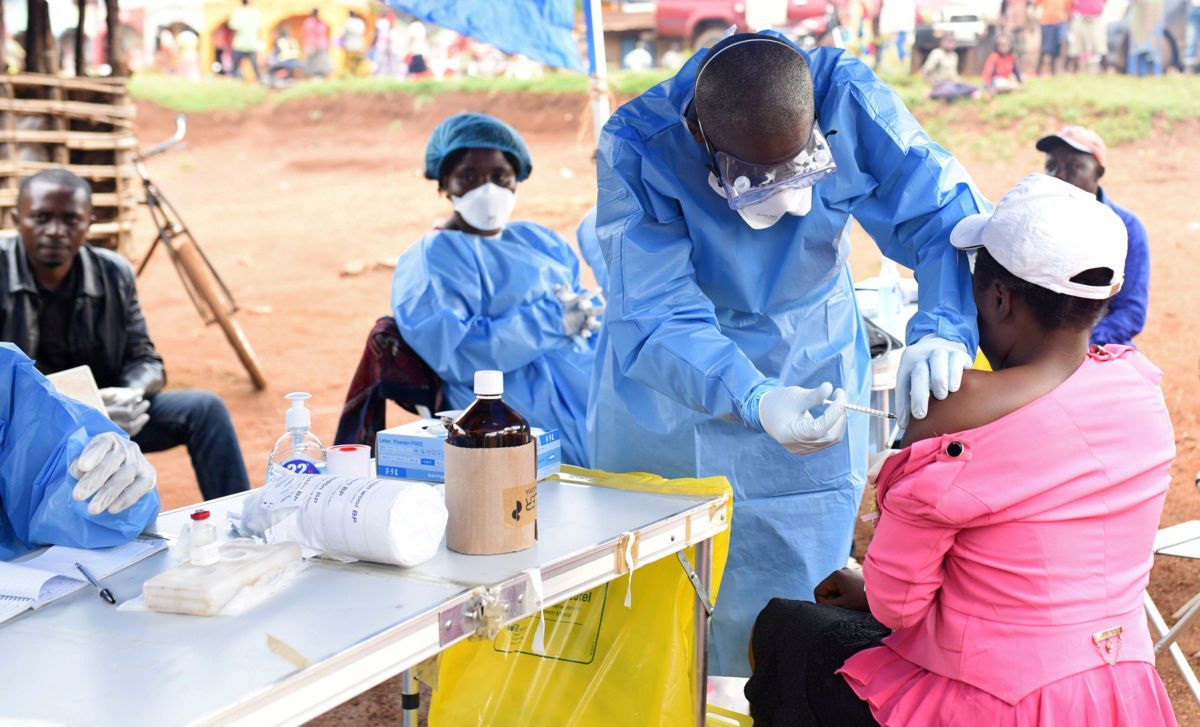
With the Ebola epidemic in the Democratic Republic of the Congo now in its tenth month and the number of new cases increasing in recent weeks, the United Nations announced measures to strengthen its response and end the outbreak.
The UN is now consolidating its political engagement and operational support to negotiate access to communities and increasing support for humanitarian coordination. The Ebola epidemic has claimed more than 1,200 lives and the risk of spread to other provinces in the eastern Congo as well as neighboring countries remains very high. A third of those who have fallen ill are children.
UN Secretary-General stressed the urgency to preserve biodiversity
In his message to mark the International Day for Biological Diversity, UN Secretary-General António Guterres urged all governments, businesses and civil society to “take urgent action to protect and sustainably manage the fragile and vital web of life on our one and only planet”.
The address came shortly after the publication of a new UN report, stating that human activity is threatening the fate of species around the world like never before. Healthy ecosystems can “provide 37 percent of the mitigation needed to limit global temperature rise”, he added, warning that the “current negative trends in biodiversity and ecosystems are projected to undermine progress towards 80 percent of the targets for the Sustainable Development Goals (SDGs). ”
Here’s what else has happened
Global Climate City Challenge: The Global Covenant of Mayors for Climate and Energy and the European Investment Bank have announced the 20 shortlisted cities of the Global Climate City Challenge. The first round of 6 cities whose projects will be supported by technical assistance and financing will be announced at the UN Climate Action Summit in New York on 23rd September.
World Health Assembly: Delegates at the World Health Assembly agreed three resolutions on universal health coverage, focusing on primary healthcare, the role of community health workers, and the September UN General Assembly high-level meeting on UHC.
Yemen: World Food Programme is considering suspension of aid in Houthi-controlled areas of Yemen. Among the reasons behind this decision are limited access to the hungry, blocking of aid convoys and local authorities’ interference with food distribution.
The Arctic: Average surface air temperatures are expected to be above normal across the majority of the Arctic regions between June and August 2019, while below to near normal sea ice conditions are expected for the majority of the Arctic, according to the Pan-Arctic Climate Outlook Forum.
Somalia: Aid agencies in Somalia are seeking US$710 million for critical life-saving assistance to 4.5 million drought-affected Somalis. After the prolonged 2016-2017 drought, drought-induced population displacement is on the rise, adding to the already 2.6 million displaced Somalis.
Reports
Measuring Distance to the SDG Targets 2019: An Assessment of Where OECD countries stand
With only 11 years left to achieve the 2030 Sustainable Development Goals, some of the most economically advanced countries have still not met targets in areas like poverty reduction, youth employment, education and training, gender equality and numerical literacy, according to the new OECD report.
According to the report, one in seven people in the OECD area live in poverty, and one in four 15-year-olds and adults lack basic numerical competency. Obesity and unemployment have been rising in one-third of OECD countries since 2005, and in 13 countries vaccination coverage is dropping, risking outbreaks of diseases thought to have been eradicated.
In the same time, countries have met targets for maternal and infant mortality; and are making progress in reducing deaths from AIDS, TB, Hepatitis B, and road accidents. They are also cutting smoking and gradually adopting renewable energy sources.
Tracking SDG7: The Energy Progress Report 2019
The Energy Progress Report shows that despite the progress, reaching the remaining unserved people, including those connected to frail and overburdened urban grids, as well as displaced people, and hard-to-reach locations, will be challenging. The report tracks global, regional and country progress on the three targets of SDG7: access to energy and clean cooking, renewable energy and energy efficiency.
According to the report, significant efforts have been made to deploy renewable energy technology for electricity generation and to improve energy efficiency across the world. However, access to clean cooking solutions and the use of renewable energy in heat generation and transport are still lagging far behind the goals.
The report points out that maintaining and extending the pace of progress will require strong political commitment, long-term energy planning, stepped-up private financing and adequate policy and fiscal incentives. Combining grid and off-grid solutions, including solar lighting, solar home systems, and increasingly mini-grids, will also be crucial.
Events
2019 Energy Efficiency Global Forum
Washington D.C., US
11-12 June 2019
EE Global 2019 will initiate critical dialogue on how to facilitate faster, broader implementation of energy efficiency solutions to help mitigate climate change and drive economic growth. The EE Global Working Group, comprised of energy efficiency experts from all regions of the world, is developing an agenda that focuses on the innovation and policy needed to ensure that efficiency remains at the forefront of the conversation.
Warsaw Humanitarian Expo 2019
Warsaw, Poland
11-13 June 2019
The Warsaw Humanitarian Expo, the first of its kind in Central and Eastern Europe, will serve as an opportunity to network with top decision makers from the humanitarian and development sectors, including UN organizations and agencies, the EU Commission, as well as major Polish and international NGOs. The event will consist of a fair, the Responsible Business for Humanitarian Emergencies conference, a procurement forum, and the Humanitarian City – a platform for meetings and debates.
European Development Days 2019
Brussels, Belgium
18-19 June 2019
EDD 2019’s overarching title is “Addressing inequalities: building a world which leaves no one behind”.
ADB Asia Clean Energy Forum 2019 (ACEF 2019)
ADB Headquarters, Manila, Philippines
17 – 21 June 2019
This year’s theme for ACEF 2019 is “Partnering for Impact”. Technical discussions at ACEF will be based on the cross-cutting approach that ADB has developed in its Strategy 2030: Achieving a Prosperous, Inclusive, Resilient, and Sustainable Asia and Pacific. Thematic Tracks during the ACEF week will include: Energy and Livable Cities, Energy and Water Sustainability, Energy and Rural Poverty Alleviation, Energy and Innovative Finance and Clean Energy Trends and Directions.
High-Level Political Forum 2019
New York, USA
9-18 July 2019
The theme will be “Empowering people and ensuring inclusiveness and equality”. The set of goals to be reviewed in depth are: Goal 4, Goal 8, Goal 10, Goal 13, Goal 16 and Goal 17. In 2019, 47 countries (7 for the second time) have volunteered to present their national voluntary reviews to the HLPF.