
Add us as your preferred source on Google to see more of our content in Search.
 Add to Preferred Sources
China joins global effort to ensure COVID vaccine access, strengthening the collaboration against hunger and donors must double investments to stamp out hunger. Here is what you missed from last week’s headlines in the international development sector:
China joins global effort to ensure COVID vaccine access for all
China is among three additional countries to have signed on to a global initiative that aims to ensure fair and equitable access to a COVID-19 vaccine once developed, the World Health Organization (WHO) reported.
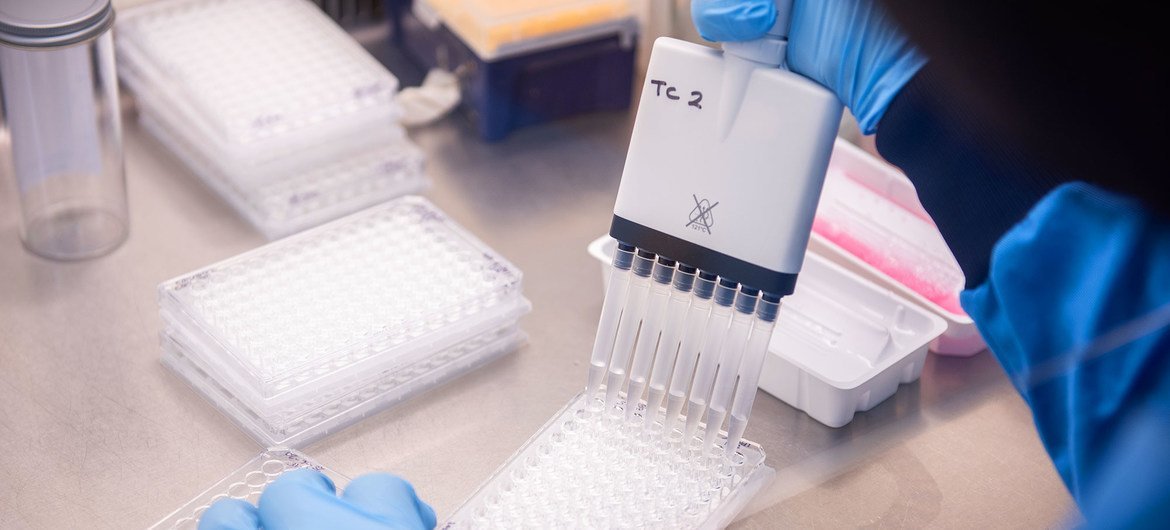
The country, together with the Republic of Korea and the tiny Pacific island of Nauru, joined the COVAX Facility this week, bringing the total number of participating nations and economies to 171, WHO chief Tedros Adhanom Ghebreyesus announced during his regular media briefing on the pandemic.
“The world is eagerly anticipating the results of trials of vaccines against COVID-19, which are needed for WHO authorization”, said Tedros.
“Once we have an effective vaccine, we must also use it effectively, and the best way to do that is by making sure it’s available to all countries equitably through the COVAX Facility.”
The global mechanism will work to deliver two billion doses by the end of next year. It currently has the largest portfolio of potential vaccines, with several in advanced human trials.
FAO, IFAD and WFP pledge to strengthen collaboration against hunger
The Director-General of the UN Food and Agriculture Organization (FAO), QU Dongyu, the President of the International Fund for Agricultural Development (IFAD), Gilbert Houngbo, and the Executive Director of the World Food Programme (WFP), David Beasley, pledged to step up their joint efforts to end global hunger, particularly amid the impacts of the COVID-19 pandemic.
It was the first time the heads of the three UN Rome-based agencies (RBA) had met since WFP was awarded the Nobel Peace Prize 2020.
“As we are marking FAO’s 75th anniversary this week, more than ever, we need to continue the partnership the RBAs have forged and renew our energy to fight hunger and build a better world,” Qu said, noting that “the challenge to leave no-one behind and no land behind can only be addressed through collective action and partnership.”
WFP Executive Director Beasley described the Nobel Peace Prize as “a call to action” to make the world aware of what the UN agencies are confronting. He noted that the award had alerted the international community to the link between conflict and food insecurity and emphasised the significance of next year’s Food Systems Summit in effecting change. “Let it inspire us, encourage us, to do more and never give up,” he said.
Donors must double investments to stamp out hunger
If donors double their investments and spend the money wisely, they could help end hunger by 2030, a coalition of research groups said in a call-to-action ahead of World Food Day.
Donors must spend an additional US$14 billion on average each year between now and 2030, roughly double what they currently spend on aid for food security and nutrition, according to new research from the Center for Development Research (ZEF), Cornell University, the Food and Agricultural Organization of the United Nations, the International Food Policy Research Institute (IFPRI), and the International Institute for Sustainable Development (IISD).
Maximo Torero, Chief Economist at FAO, said: “The world produces enough food to feed everyone. So it’s unacceptable that 690 million people are undernourished, 2 billion don’t have regular access to sufficient amounts of safe, nutritious food, and 3 billion people cannot afford healthy diets. If rich countries double their aid commitments and help poor countries to prioritize, properly target, and scale-up cost-effective interventions on agricultural R&D, technology, innovation, education, social protection, and on trade facilitation, we can end hunger by 2030.”
The call-to-action represents a coming together of two projects – Ceres2030: Sustainable Solutions to End Hunger, led by Cornell, IFPRI, and IISD, and joint research from FAO and ZEF.
DevelopmentAid Editorials
Haiti to receive US$6.9 million of additional help from the World Bank for renewable energy investments
Renewable Energy Sources (RES) facilities which will be constructed in Haiti are crucial to meet the energy needs of the health infrastructure as well as households, businesses, and community services.
Millions of people are deprived of safe water and sanitation
Despite being particularly important during the COVID-19 pandemic, drinking water and sanitation have become a luxury in many regions of the world. Billions of people are the victims of persistent inequalities in access to water, sanitation, and hygiene (WASH) facilities in an existing reality that has been exacerbated by the current devastating crisis. Stark differences persist in both the number of people with access to safe water as well as in the improvements made to the quality of facilities over a period of time. Ensuring universal access to WASH in line with the Sustainable Development Goal 6: Ensure access to water and sanitation for all (SDG) target will require tailored interventions and investments that focus on reducing the existing inequalities.
The EU invests €0.7 million to tackle gender-based violence in Nepal
With the aim of strengthening and accelerating efforts to prevent and respond to gender-based violence (GBV) by addressing the emerging challenges and pre-existing gaps that have been worsened by COVID-19, the Delegation of the European Union to Nepal (EU) has invested €0.7 million to launch a two-year project in Province 2 and the Karnali province. The project was launched today in partnership with the United Nations Population Fund and in coordination with the Ministry of Women, Children and Senior Citizens.
Here’s what else has happened
ILO: The ILO and UNICEF have signed a new Memorandum of Understanding (MOU) on Skills Development.
Spain: The European Investment Bank (EIB) is providing €50 million to the Autonomous Community of Navarre to strengthen its capacity to respond to the COVID-19 health crisis. The EU bank financing will enable the Spanish region to adapt its healthcare infrastructure to meet the additional costs generated by the pandemic.
FAO: The Food and Agriculture Organization of the United Nations (FAO) has welcomed a $3 million contribution from Germany and Sweden to help farmers in the world’s most vulnerable countries fight the impact of climate change and to build sustainability.
ADB: The Asian Development Bank (ADB) and the Government of India have signed a $270 million loan to develop water supply and integrated stormwater and sewage management infrastructure and strengthen capacities of urban local bodies for improved service delivery in the state of Madhya Pradesh.
UNHCR: UNHCR, the UN Refugee Agency, has stepped up its cash assistance to support thousands of extremely vulnerable refugees whose livelihoods have been severely impacted by the continuing coronavirus pandemic in the Islamic Republic of Iran. But further funding is needed to support many more who are facing increased hardship and destitution.
Reports
State of Climate Services 2020 Report: Move from early warnings to early action
Over the past 50 years, more than 11,000 disasters have been attributed to weather, climate, and water-related hazards, involving 2 million deaths and US$ 3.6 trillion in economic losses. While the average number of deaths recorded for each disaster has fallen by a third during this period, the number of recorded disasters has increased five times and the economic losses have increased by a factor of seven, according to a new multi-agency report.
Read the report: State of Climate Services 2020 Report.
APEC needs to build greater food systems’ resiliency
APEC member economies need to remain vigilant and proactive in their efforts to build greater resiliency in food systems and in addressing connectivity and supply chain obstacles in the trade of agricultural products, according to a new policy brief by the APEC Policy Support Unit.
Read the report: Food Security Response Measures to COVID-19.
Dramatic rise in climate disasters over last 20 years
A UN report published to mark the International Day for Disaster Risk Reduction on October 13, confirms how extreme weather events have come to dominate the disaster landscape in the 21st century.
Read the report: The Human Cost of Disasters 2000-2019.
Events
Virtual | ITU Virtual Digital World 2020
? 20 -21 October 2020
Virtual
On the theme “Building the digital world. Together.”, the event will be a dynamic virtual experience exploring the comprehensive digital transformation in the region and globally, focusing on key issues relating to the development of the digital economy, today and tomorrow.
Virtual | EBRD Green Cities: Hand in Hand – Green and Inclusive Recovery
? 20 October 2020 ? 11:00 – 12:00 (CET)
Virtual
The EBRD is supporting cities in its region to address the COVID-19 pandemic outbreak while balancing the need to tackle climate change. With more than 60% of people in the EBRD region living in cities, urban centres have been particularly vulnerable to the COVID-19 crisis.
Course | Biodiversity in Environmental Impact Assessments
? 20 October 2020 – 30 November ? 8:00 AM – 11:55 PM
Course
This course provides a knowledge base on accepted good practices for the effective incorporation of biodiversity into the process of Social and Environmental Impact Assessment (EISA). These good practices have been created to ensure that the biodiversity information included in EISAs provides a precise and adequate analysis of the impact on biodiversity, providing a basis for the development of effective mitigation measures to ensure that these impacts are handled in an appropriate manner.