
Add us as your preferred source on Google to see more of our content in Search.
 Add to Preferred Sources
In early February 2025, Mariam Mohammed took her seven-year-old son, Babagana, to a Nigerian clinic where he usually received treatment for sickle cell disease. But the facility doors were shut. Mariam was not aware that two weeks earlier, on January 20, Donald Trump had issued Executive Order 14169, suspending almost all U.S. foreign assistance. The stop-work orders that followed had closed that clinic just over a week before Babagana arrived. Deprived of the appropriate medical assistance, Babagana died that night.
Three months later, in May 2025, Secretary of State Marco Rubio was questioned at a congressional hearing as to whether anyone had died as a result of the U.S. aid freeze. Rubio replied negatively.
“Nobody, especially no child, has died on my watch,” he confirmed.
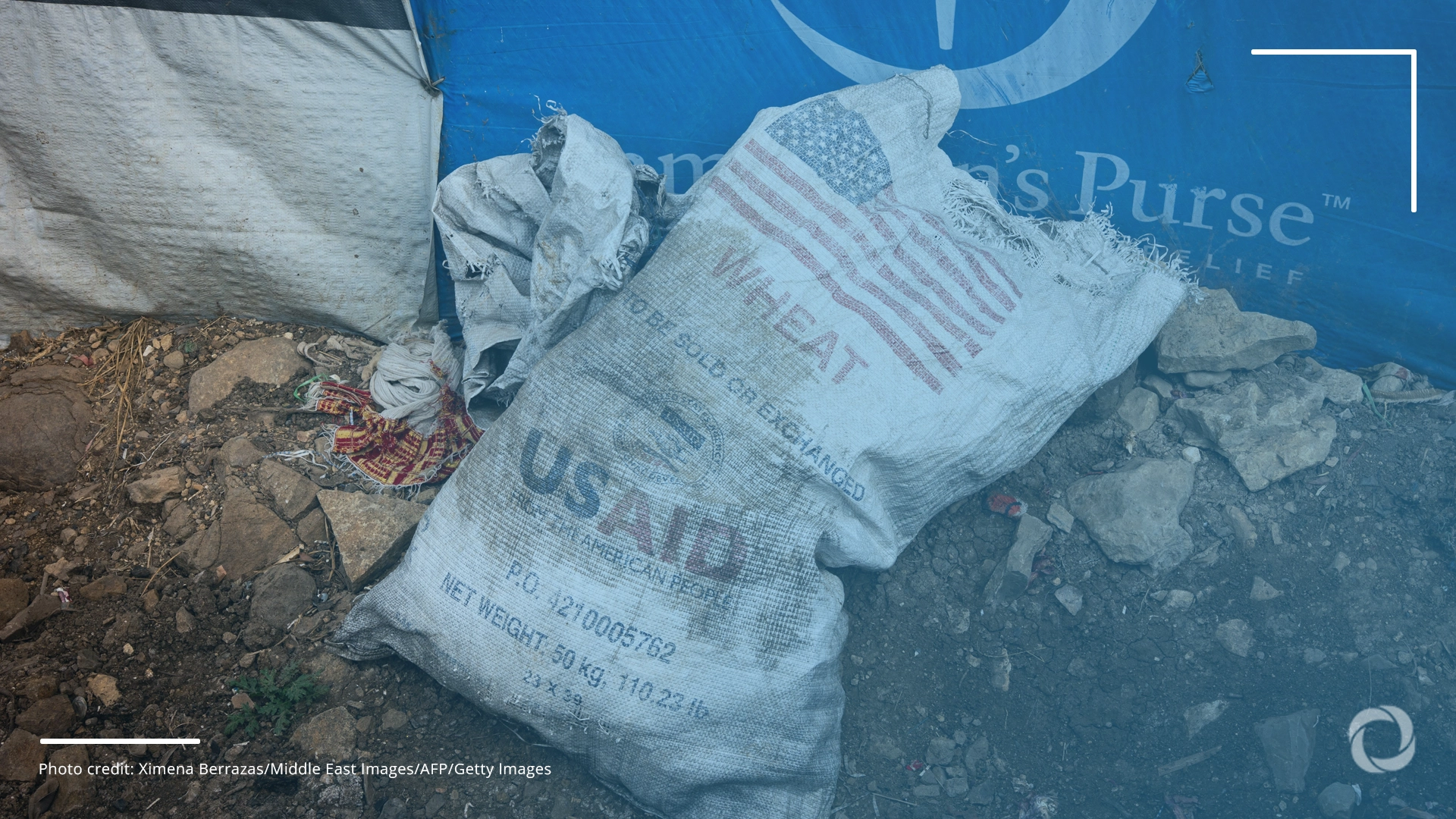
But Babagana’s death was already on record. One year on, his case is no longer exceptional. Others meeting a similar fate are being confirmed by field data across dozens of countries. What the administration dismissed as not happening has now been documented in terms of deaths, lost jobs, broken pipelines, and halted programs, all measurable consequences of the decision to dismantle, in a matter of weeks, an agency that had operated for six decades across 130 countries – USAID.
The justification offered by the administration was that the United States Agency for International Development had become bloated, inefficient, and “misaligned with American interests,” despite foreign aid accounting for less than 1% of the US federal budget. By March 2025, Rubio had confirmed that 83% of USAID’s portfolio had been canceled. By 1 July 2025, the agency ceased to exist, having been absorbed into the U.S. State Department. The administrative cost of that dismantling alone was US$6 billion, according to the State Department draft assessment.
The post-USAID era: the scale of the cuts
The numbers involved in the reduction in U.S. aid are stark at every level of measurement. In 2024, the U.S. spent a total of US$68 billion on foreign assistance, covering an estimated 44% of global humanitarian needs. By year-end 2025, that had fallen to US$40 billion according to foreignassistance.gov. The OECD reports that U.S. official development assistance fell by 57% in 2025, compared to 2024. In FY2023, USAID provided US$43.4 billion in aid and managed about 60% of U.S. foreign assistance funds. In FT2024, the number of obligations dropped to US$35.4 billion. New full fiscal year 2025 data published by the Centre for Global Development (CGD) covering USAID-administered spending from October 2024 to September 2025 shows that outlays, money physically disbursed to partners and programs, fell 23%, from US$32.5 billion to US$25 billion. But the more alarming number lies in the obligations that collapsed by 43%, from US$35.4 billion to US$20.3 billion. Obligations are the pipeline. When they collapse at that rate, there is no recovery, merely a managed decline.
US foreign assistance: the collapse in numbers
USAID outlays and obligations FY2024 vs FY2025, and total US foreign aid (US$ billions)
Source: CGD / Kenny & Sandefur, ‘USAID Spending at the Country and Sector Level: What Happened in FY2025?’ April 2026; OECD DAC estimates.
The human toll has now been modeled across multiple credible institutions. The CGD estimates there were between 500,000 and one million additional deaths in 2025 alone.
Sector by sector: none have been spared
Health took the earliest and deepest blow. The Kaiser Family Foundation found that roughly 80% of 770 USAID global health awards, totaling approximately US$12.7 billion in funding, had been terminated.
The modeling platform ImpactCounter estimated that by January 2026, cuts to PEPFAR, credited with saving 25 million lives since 2003, had resulted in more than 159,000 adult deaths and 16,000 child deaths. The termination of other USAID health programs contributed to an estimated 53,577 additional child deaths from malaria and 62,699 from tuberculosis.
But the sectoral damage has extended far beyond health. Agricultural sector cuts are predicted to affect roughly 735 million people who could now face hunger.
The cancellation of education programs has affected 44 million learners. UNICEF predicts that 6 million additional children will be out of school by the end of 2026 due to a US$3.2 billion education aid shortfall.
The CGD sector data, drawn from actual USAID FY2025 disbursements and obligations published on foreignassistance.gov, shows the full systemic nature of the collapse across 10 major sectors.
USAID disbursements and obligations, FY2024 vs. FY2025, 10 sectors. The FY2025 obligations column shows what remains in the forward pipeline.
Source: CGD / Kenny & Sandefur, April 2026. Data from ForeignAssistance.gov FY2025 actuals. Obligations signal whether programmes survive beyond this year; red figures indicate cuts
The geography of loss: five most affected countries
In absolute dollar terms, the largest single cut in U.S. aid was to Ukraine, a decision weighted with geopolitical significance given Russia’s ongoing war. Ethiopia, Jordan, and the Democratic Republic of the Congo were all facing active humanitarian emergencies when the stop-work orders were issued.
The CGD has estimated that Madagascar, Georgia, El Salvador, Senegal, Nepal, Indonesia, Liberia, and the Philippines each saw cuts of 95% or more to their previous USAID program value. Obligations to Afghanistan fell from US$743 million in FY2024 to a negative figure in FY2025, as previously promised funding was clawed back.
U.S. funding to Africa fell from US$12.1 billion in 2024 to US$7.86 billion in 2025, its lowest level in a decade. Sub-Saharan Africa faces an estimated total aid reduction of at least 20%, potentially pushing 5.7 million people into extreme poverty by 2030.
The Lowy Institute estimates that total aid financing to Southeast Asia could fall by over US$2 billion to US$26.5 billion, with approximately 83% of U.S. development programs in the region being terminated.
Latin America, El Salvador, Honduras, and Guatemala each lost 95% or more of the USAID program value. Haiti, already only receiving 27.1% of the required humanitarian funding, lost most of its remaining food assistance after the USAID aid cuts.
Five countries: what they lost
USAID outlays and new obligations, FY2024 vs FY2025—five largest recipients by FY2024 outlay. Ukraine’s cut dwarfs all others in absolute terms.
Source: CGD / Kenny & Sandefur, April 2026; Congressional Research Service (2025); ForeignAssistance.gov. Ukraine figures reflect USAID-administered direct budget support and development assistance accounts.
The gap no one can fill
The impact of the closure of USAID could have been absorbed had other donors stepped in, but they did not. Instead, they simultaneously cut their budgets. 2025 was the first time in nearly 30 years that the U.S., the UK, France, and Germany cut their aid contributions at the same time. The UK cut bilateral aid by 4.5% in 2025, announcing a planned 40% cut until 2029, and France cut its aid by nearly US$1 billion. According to the OECD, DAC donors collectively reduced ODA to US$174.3 billion in 2025, representing a 23.1% drop compared to 2024.
However, some humanitarian and development actors did move into the vacuum that USAID left behind. The UAE made a US$550 million humanitarian pledge. China committed over US$50 billion in new financing at the Forum on China-Africa Cooperation over three years. Japan, South Korea, the Gulf countries, and India all also increased development spending.
Meanwhile, recipient countries are taking action, with Nigeria passing a US$200 million additional health budget and South Africa pledging domestic funding to sustain antiretroviral treatment.
However, none of this can replicate what USAID undertook systematically.
“China has the technical expertise and the finance,” explained George Ingram from the Brookings Institution during DevelopmentAid’s Ask Me Anything session, “but it doesn’t seem to have the long-term will to stay the course on traditional aid projects. The Arab states are going to be focused on rebuilding their region. European countries have Ukraine sapping money out of traditional donor accounts. Philanthropy only represents 5% of what has been traditional foreign aid.”
“No foundation or group of foundations can provide the funding, workforce capacity, expertise, or leadership the United States historically provided,” commented Rob Nabors, President of the Gates Foundation.
The broken chain: NGOs, contractors and local partners
Before the shutdown, USAID channeled 40% of its funds through for-profit contractors, while NGOs implemented 52% of its programs. Large companies, including Chemonics, DAI Global, Abt Global, and RTI International, had built business models around multi-year USAID contracts, some deriving 88% of revenue from USAID work. The liquidity collapse was immediate. DAI reported US$120 million in unpaid invoices while Chemonics disclosed there was US$103 million outstanding.
What followed the shutdown were massive layoffs.
By January 2026, 258,161 jobs had been lost across the global development sector. As a result, the consulting market became structurally oversaturated with development professionals flooding a market that had collapsed with some reducing their fees by 25–50% to remain competitive. Many are leaving the sector entirely in an exodus that analysts describe as increasingly irreversible.
There exists a deeper irony identified by Ingram. The administration that dismantled USAID with criticism of its large implementing partners now finds itself dependent on those same companies.
“They’re the organizations with the capacity to quickly staff up and carry out those projects,” Ingram said. “It is the smaller organizations, and the local ones furthest from Washington, that have been most permanently damaged.”
This has exposed the localization paradox. USAID had set a target of 25% of eligible funding reaching local organizations by 2025. In practice, that figure reached 12.1% in FY2024. The shutdown has accelerated the rhetoric of localization while destroying the funding that might have made it real.
Impact on ongoing and future projects
The termination of most awards mid-cycle affected not just future funding but the investments already made. Of 11,004 contracts and grants tracked across USAID and the State Department, only 3,052 remained active as of August 2025, a survival rate of 28%.
The Trump administration terminated 86% of USAID awards and 41% of State Department foreign aid awards, amounting to approximately US$80.5 billion in cancelled funding. The Rescissions Act of July 2025 clawed back a further US$9 billion in foreign aid.
The pipeline collapse was physical as well as financial. At least 500,000 metric tons of U.S.-grown food, enough to feed 36 million people, valued at nearly US$500 million, were stranded in ports and warehouses. The Washington Post found that the suspension had disrupted a US$900 million global health supply chain, leaving malaria and HIV medications warehoused while children in Africa died.
Meanwhile, US$9.7 million in USAID-procured contraceptives expired in Belgium despite purchase offers from various organizations. The Guttmacher Institute estimates that 47.6 million women lost access to family planning in a single year, resulting in 17.1 million unintended pregnancies and 34,000 preventable maternal deaths.
Data infrastructure has been permanently severed. USAID’s Development Experience Clearinghouse, containing over 200,000 project documents accumulated over six decades, was taken offline, with only 110,000 files later recovered.
A restructured donor landscape
The dismantling of USAID has accelerated a shift in how global aid is financed and delivered, away from multilateralism and toward bilateral, transactional, conditional, and interest-driven funding.
The clearest indication of this came in December 2025 when the U.S. pledged US$2 billion in humanitarian assistance through the United Nations Office for the Coordination of Humanitarian Affairs (OCHA), down from US$8-10 billion annually. The funding is now tied to country-level agreements that align with U.S. priorities, with agencies under pressure to “adapt, shrink or die”.
At the same time, Washington has redesigned its aid model to be leaner, bilateral, and increasingly tied to trade, investment, and measurable returns, with funding flowing government-to-government and the NGO-contractor layer being reduced.
The effect is sharper prioritization with fewer crises being funded, fewer people being reached, and more programs cut. For example, in May 2026, the UN’s US$47 billion 2025 Global Humanitarian Appeal was only 35.1% funded.
The multilateral system is under strain. UN agencies face serious shortfalls as resources contract, compounded by the U.S. withdrawal from 66 international bodies such as the World Health Organization.
To survive, analysts have found that NGOs are cutting programs, merging operations, and turning to private sector partnerships. Two-thirds now expect closer ties with for-profit actors, raising questions about the balance between humanitarian goals and commercial incentives.
One year on, Babagana remains underground. What the administration called a “realignment”, the data now calls something else entirely: a contraction that will define global health and development outcomes for a generation. The pipeline has been broken, institutions have been hollowed out, and the professionals best positioned to rebuild them have left. For the next Babagana, there may be no clinic to be turned away from.