
Add us as your preferred source on Google to see more of our content in Search.
 Add to Preferred Sources
‘Inequality virus’ threatens ‘catastrophe for all’, global faith leaders unite to help tackle forced displacement and leaders rally to accelerate access to COVID-19 vaccines. Here is what you missed from last week’s headlines in the international development sector:
‘Inequality virus’ threatens ‘catastrophe for all’ unless crisis can be overcome together
The COVID-19 pandemic is leading to “an even more unequal world”, the Deputy UN chief said on April 15, speaking at the closing session of the Financing for Development (FfD) Forum, with many lower-income countries now seeing development gains reversed.
Deliberations throughout the four-day-long forum highlighted the “full scope” of the COVID impact, said UN Deputy Secretary-General, Amina Mohammed.
“The worst health and economic downturn in our lifetime have laid bare and exacerbated the vulnerabilities in our economies and societies, leading some to describe COVID-19 as the inequality virus”, she added.
Developing countries have faced “ballooning debt burdens” and constrained fiscal budget, and high borrowing costs, with a limited ability to respond to the pandemic, Ms. Mohammed explained.
Global faith leaders unite to help tackle forced displacement
Religious leaders representing the world’s diverse faith traditions committed on April 13 to work together to address the root causes of forced displacement and help those forced to flee by promoting peacebuilding, conflict prevention, inclusion, and social cohesion in their countries and regions.
The commitments came during the inaugural meeting of the Multi-Religious Council of Leaders. The Council comprises more than 20 religious and spiritual leaders and was born out of the need to enlist the help of faith leaders and communities in tackling the root causes of global forced displacement.
“The call to ‘welcome the stranger,’ through protection, compassion, care, and hospitality, is deeply rooted in all religions,” UN High Commissioner for Refugees Filippo Grandi said during the virtual meeting to establish the group.
“As wars, conflict, and persecution continue to force people to flee their homes, we seek the support of faith leaders and their communities. They are key in not only standing with and supporting refugees during their displacement but in addressing the root causes that gave rise to their flight.”
The Council was established by UNHCR, the UN Refugee Agency, in cooperation with Religions for Peace, a long-time UNHCR partner providing inter-religious solidarity and support to refugee and migrant communities.
Global leaders rally to accelerate access to COVID-19 vaccines for lower-income countries
World leaders joined forces on April 15 at the “One World Protected” event to take stock of progress in global efforts to ensure equitable access to COVID-19 vaccines and seek ways to further accelerate vaccination. The event, hosted by US Secretary of State Antony J. Blinken, Acting Administrator of USAID Gloria Steele, and Chair of the Board of Gavi José Manuel Barroso, was joined by more than 200 participants, including leaders from government, business, civil society, and partner organizations across the globe.
In a vital step on the path to providing global protection against COVID-19, a new Investment Opportunity was unveiled, launching a campaign to raise an additional $US 2 billion from donors and the private sector for the Gavi COVAX Advance Market Commitment (AMC). With this funding, the COVAX mechanism can lock in up to 1.8 billion vaccine doses for people at risk in 92 lower-income economies and accelerate coverage. The campaign will also aim to mobilize $US 1 billion in cost-sharing from countries through domestic resource mobilization and the support of multilateral development banks (MDBs).
Secretary Blinken and Acting USAID Administrator Steele, hosts of the meeting, confirmed that the United States considers COVAX a critical instrument to ensure a coordinated global response. President Biden decided to join COVAX as one of the first acts of his new Administration, and the United States has become the single largest contributor to the Gavi COVAX AMC. The United States will continue to encourage world leaders to join in the effort.
DevelopmentAid Editorials
Women worse hit by pandemic than men – Global Gender Gap Report 2021
The times scale needed to close the gender equality gap has increased by 36 years in just 12 months according to the 2021 Global Gender Gap Report unveiled by the World Economic Forum (WEF). While the 2020 report showed that 99.5 years were needed to do away with gender disparities, the 2021 report now puts this figure at an average of 135.6 years. The regress, which is believed to have been triggered by the impact of the COVID-19 pandemic on women, is the first registered since the earliest issue of the report in 2006.
Australia’s development aid focused on health, education, poverty
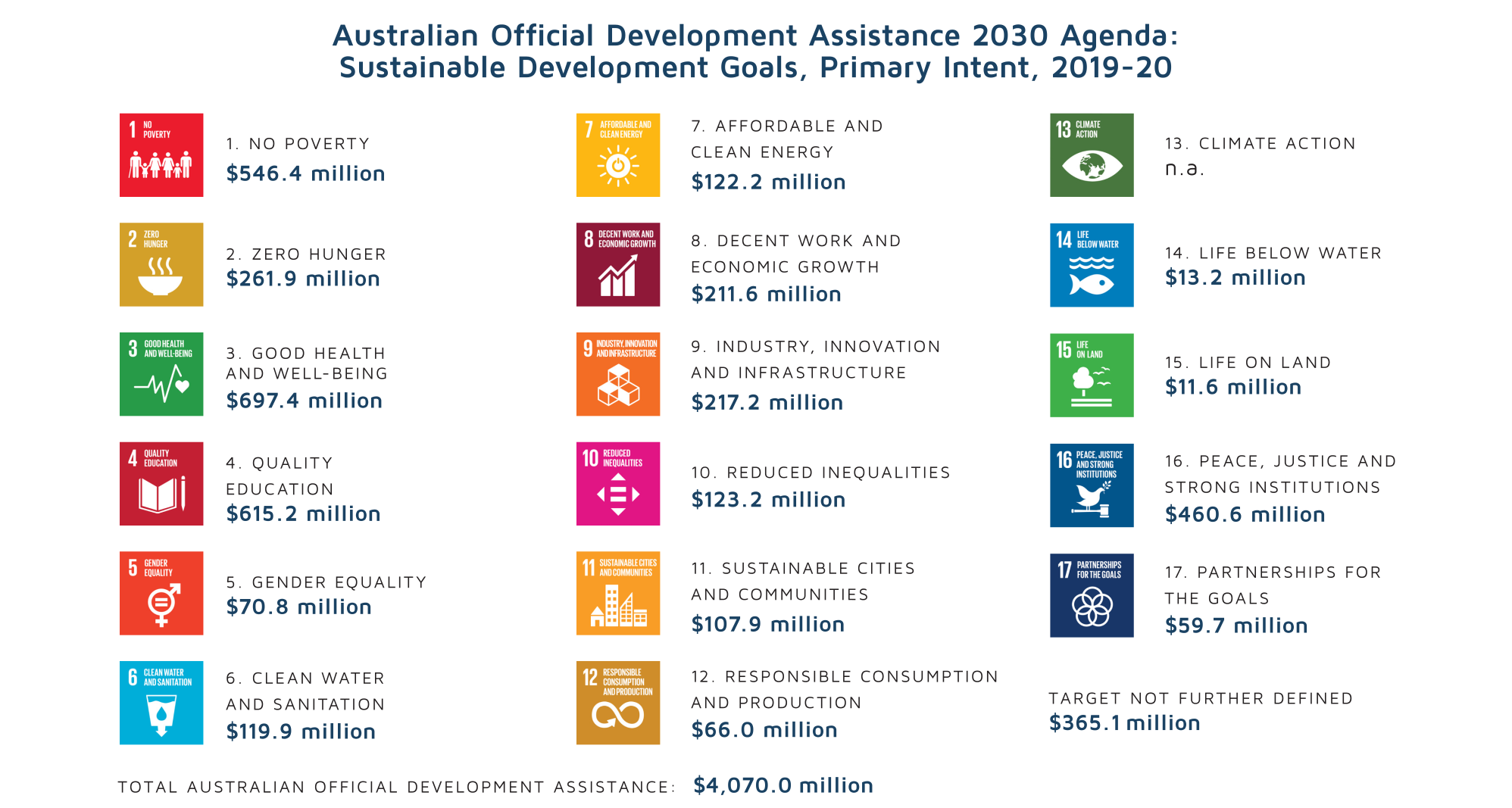
Almost half of Australia’s AU$4 billion budget for development aid focused on three Sustainable Development Goals (SDG) in 2019-2020: health, education, and poverty, according to a report recently released by the country’s Department of Foreign Affairs and Trade.
Polish parliament takes the first step to exit an international treaty preventing violence against women
With as many as 12% of Polish women being beaten by their male partners, in mid-March, the parliament conducted the first reading of a controversial bill that aims to withdraw Poland from the Istanbul Convention – an important instrument put in place by the United Nations and the Council of Europe (CE).
Producers of 70% of world’s food continue to be marginalized after a quarter of a century struggle
This year, 17th of April marks the 25th anniversary of the International Day of Peasants’ Struggle. While being an occasion to remember the importance of respecting the human rights of more than 2 billion peasants and people working in rural areas, it serves to remind society of the importance of expanding these rights not only for the sake of those communities but also entire economies since an increasing amount of evidence shows that social capital forms the basis of a well-functioning society and consequently its development.
Here’s what else has happened
EBRD: The European Bank for Reconstruction and Development (EBRD) aims to fully align its activities with the goals of the Paris Agreement on climate change mitigation, adaptation, and finance within the next 20 months.
World Bank: The World Bank launched an early twentieth replenishment process of the International Development Association (IDA), its fund for the world’s poorest countries, aiming to support countries in their recovery from the COVID-19 crisis and transition to green, resilient, and inclusive development. The IDA20 replenishment will conclude in December 2021 with a policy and financial package to support 74 countries between July 2022 and June 2025.
Japan: Three independent UN human rights experts expressed deep regret on April 15 over Japan’s decision to discharge potentially still radioactive Fukushima nuclear plant water into the ocean, warning that it could impact millions across the Pacific region.
FAO and the African Union Commission: The Food and Agriculture Organization of the United Nations (FAO) and the African Union Commission’s Department of Agriculture, Rural Development, Blue Economy and Sustainable Development (AUC-DARBE) have launched a guide to boosting intra-African agricultural trade under the new African Continental Free Trade Area (AfCFTA) agreement. The AfCFTA began trading on 1 January 2021 and is the largest free trade area in the world in terms of the number of countries covered. It represents a market of 1.2 billion consumers.
Reports
Global shortage of innovative antibiotics fuels emergence and spread of drug-resistance
The world is still failing to develop desperately needed antibacterial treatments, despite growing awareness of the urgent threat of antibiotic resistance, according to a report by the World Health Organization.
Nature-based solutions should play increased role in tackling climate change
Climate change, biodiversity loss, and degradation of ecosystems are linked and all have devastating consequences for our economic and social stability, health, and well-being. Working with nature is increasingly recognized as an efficient way to tackle these growing challenges, according to the new EEA report ‘Nature-based solutions in Europe: Policy, knowledge, and practice for climate change adaptation and disaster risk reduction.’
ADB should ramp up efforts to mitigate COVID-19 impact on Sustainable Development Goals
The Asian Development Bank (ADB), in partnership with other development organizations, must give high priority to efforts to assess and address the implications of the coronavirus disease (COVID-19) crisis on the achievement of the Sustainable Development Goals (SDGs), according to the 2021 Annual Evaluation Review (AER) conducted by ADB’s Independent Evaluation Department (IED).
Events
Doing Business with EBRD. Procurement Guidelines and Best Practices | Webinar
? 29 April 2021 ? 4 PM (Brussels Time) /10 AM (Washington DC Time)
Virtual
Join us for this exciting free webinar, “Doing business with EBRD. Procurement guidelines and best practices”.
The speakers will be procurement specialists from the European Bank for Reconstruction and Development (EBRD) and the conversation will focus on procurement procedures and best practices in the preparation of proposals.
You will have the possibility to ask questions directly and to learn how COVID-19 has affected the offers prepared by contractors.
HOST: Sergiu Casu, Business Development Director, DevelopmentAid.
Speaker: Johan Bert, Acting Interim Director, Procurement Operations and Delivery Department, EBRD
Speaker: Jan Jackholt, Director Procurement Policy, and Advisory Department. EBRD
Participation is free of charge but the number of seats is limited, so REGISTER NOW
Any questions, feel free to contact us at [email protected]
2021 UN Biodiversity Conference (COP 15)
? 17 – 30 May 2021
Kunming, China
The 15th meeting of the Conference of the Parties (COP 15) to the Convention on Biological Diversity (CBD), the tenth Meeting of the Parties to the Cartagena Protocol on Biosafety (Cartagena Protocol COP/MOP 10), and the fourth Meeting of the Parties to the Nagoya Protocol on Access and Benefit-sharing (Nagoya Protocol COP/MOP 4) are expected to address a series of issues related to the implementation of the Convention and its Protocols.
Workshop | Integrated Marine Spatial Planning and Sustainable Blue Economy
? 19 – 23 April 2021
Workshop
Strategic Marine Spatial Planning and Sustainable Blue Economy Workshop in Brussels, Belgium is a unique program that has been specifically designed for those professionals who intend to employ MSP for marine conservation, support sustainable blue economy growth, and promote responsible and accountable maritime industry organizations. The program bridges the gap between marine science, management, and spatial planning, and therefore, equips its delegates with unmatched skills and knowledge to embark on new levels in their career.
SAMEA Online Capacity Building Workshops | Virtual
? 1-3 June 2021
Virtual
SAMEA’s popular online Capacity Building Workshops are taking place from 1 to 3 June 2021! The theme for this year’s workshops is: “Monitoring and Evaluation in the context of Global Crises”.
UN Forum on Forests – 16th session (UNFF 16) | Virtual
? 26-30 April 2021
Virtual
This year, UNFF16, will have a full agenda. As outlined in the quadrennial programme of work, UNFF16 will be a technical session, and will among other discussions, consider and adopt the 4POW for 2021-2024. The Forum will also take into account the review cycle of the High-level Political Forum on Sustainable Development (HLPF), and the theme of the 2021 International Day of Forests, “Forest Restoration: a Path to Recovery and Well-being.”