
Add us as your preferred source on Google to see more of our content in Search.
 Add to Preferred Sources
Gaza-Israel conflict, Afghanistan rocked by third and fourth earthquakes and insecurity in Somalia worsens. Here is what you missed from last week’s headlines in the international development sector.
Gaza-Israel conflict: deepening concern for civilians amid ongoing strikes
The UN Human Rights Office (OHCHR) issued a fresh alert for civilians left in northern Gaza, amid ongoing military operations in the enclave ahead of an anticipated full-scale Israeli response to Hamas’s 7 October attack.
The past 10 days of conflict have claimed the lives of 4,200 people, forced more than one million individuals to flee their homes following an order from the Israeli authorities, and left large areas in the Gaza Strip “reduced to rubble”, according to the Office of the High Commissioner for Human Rights (OHCHR).
“We have grave fears about the toll on civilians in the coming days,” said OHCHR spokesperson Ravina Shamdasani, “with military operations showing no signs of abating, a continued siege on Gaza affecting water supply, food, medicines, and other basic needs and daily indications of violations of international humanitarian law and international human rights law.”
Afghanistan rocked by third and fourth earthquakes in a week
A further 2 strong earthquakes have struck Afghanistan’s western Herat province, days after 2 initial earthquakes devastated the region. Each successive quake struck close to Herat City, the provincial capital.
There were 2 earthquakes, measured at a magnitude of 6.3 and 5.4 respectively, that hit early in the morning, adding to the number of people killed and injured in the recent disasters. The earlier earthquakes, both 6.3 in magnitude, hit the area on 7 and 11 October.
Somalia: Insecurity worsens, civilians pay the price
Insecurity persists in Somalia, with extremist group Al-Shabaab and fighting in the Laascaanood region taking a heavy toll on civilians, the UN envoy for the country told the Security Council.
Briefing Ambassadors in New York, UN Special Representative for Somalia Catriona Laing, described the country as being at a critical juncture.
“Last year, we saw the largest increase in civilian casualties since 2017. Sadly, early data indicate a similar trend in 2023, with 1,289 civilian casualties recorded so far,” she said.
The military campaign against Al-Shabaab in central Somalia faced setbacks, though the national army and allied clan militias were able to initially retake significant territory.
“In response to its own setbacks, Al-Shabaab has increased the use of 107mm rockets, particularly in Mogadishu. It has also conducted targeted attacks on high-profile Somali politicians,” Ms. Laing added.
DevelopmentAid Editorials
The easiest way for development experts from Latin America and the Caribbean to boost their careers
According to the World Bank, poverty rates in Latin America and the Caribbean have remained stubbornly persistent at around 25% for the last few years, which is why sustainable development experts from this region are increasingly in great demand. Indeed, in 2021, official development assistance (ODA) to the Latin America and Caribbean region reached $12 billion.
If you are an expert in fields such as food security, sustainable farming systems, climate resilience, environmental protection, gender inequality, and social development and have a Latin American or Caribbean background, there are countless opportunities waiting for you from international organizations and agencies such as the UN’s Food and Agriculture Organization, the World Bank, UNICEF, World Food Program, the Inter-American Development Bank (IDB), the Development Bank of Latin America and the Caribbean (CAF) and many others.
Internal displacements on the rise as climate-related disasters become more volatile and frequent
Over one billion people may be exposed to coastal-specific hazards by 2050, with 216 million at risk of internal displacement, as the frequency and strength of climate-related disasters increase over time. The United Nations has indicated that 43% of greenhouse gas (GHG) emissions should be cut by 2030 to keep the world under the 1.5 °C global warming threshold.
Aid for embattled Gaza stuck at Egyptian border as the enclave faces a “humanitarian catastrophe”
UN Emergency Relief has warned that “the specter of death is hanging over Gaza” following Israel’s decision to cut off supplies of water, food, and fuel to the enclave. Hundreds of tons of humanitarian aid have failed to reach the 2.3 million people in Gaza as all border crossing points have been closed and no humanitarian corridor has yet been established.
Here’s what else has happened
Health crisis: Lack of access to water is one of the biggest challenges in the humanitarian emergency in Gaza, and children face the greatest health risks. Action Against Hunger staff warn that overcrowded displacement shelters are close to the breaking point, as thousands of people accessing the shelters also face inadequate water and sanitation infrastructure.
Ireland: In response to the unprecedented humanitarian catastrophe unfolding in the Gaza Strip, Ireland has come forward and announced a critical additional contribution of EUR 10 million in lifesaving funding. This core funding will help UNRWA sustain its response and operations in the coming months. The support from Ireland is in addition to EUR 8 million already received earlier this year.
WHO: The World Health Organization (WHO) has released a new publication listing key regulatory considerations on artificial intelligence (AI) for health. The publication emphasizes the importance of establishing AI systems’ safety and effectiveness, rapidly making appropriate systems available to those who need them, and fostering dialogue among stakeholders, including developers, regulators, manufacturers, health workers, and patients.
UNDP and SIA: The United Nations Development Programme (UNDP) and the Secure Identity Alliance (SIA) announced the signing of a Memorandum of Understanding (MOU) to assist developing countries in implementing, strengthening and/or expanding their digital identity systems.
Australia: The Australian Government will provide $500,000 to the United Nations refugee agency, UNHCR to alleviate the suffering of Nagorno-Karabakh Armenians who fled the region following Azerbaijan’s recent military escalation.
Reports
Lack of ambition and attention risks making electricity grids the weak link in clean energy transitions
First-of-its-kind global study finds the world must add or replace 80 million km of grids by 2040, equal to all grids globally, to meet national climate targets and support energy security.
Efforts to tackle climate change and ensure reliable supplies of electricity could be put at risk unless policymakers and companies quickly take action to improve and expand the world’s electricity grids, according to a special report released by the IEA.
Grids have formed the backbone of electricity systems for more than a century, delivering power to homes, factories, offices, and hospitals – and their importance is only set to rise as electricity’s role in energy systems increases. But the new report, Electricity Grids and Secure Energy Transitions, which offers a first-of-its-kind stocktake of grids worldwide, finds signs they are not keeping pace with the rapid growth of key clean energy technologies such as solar, wind, electric cars, and heat pumps. Without greater policy attention and investment, shortfalls in the reach and quality of grid infrastructure could put the goal of limiting global warming to 1.5 °C out of reach and undermine energy security, the report warns.
New FAO report calls for action to bridge ‘green social divide’ in cities
Urban forests, trees, and green spaces play a pivotal role in enhancing the quality of urban life, but their benefits are still not equally accessible to all, according to a new report from the Food and Agriculture Organization of the United Nations (FAO).
Launched at the 2nd World Forum on Urban Forests in Washington DC, Urban Forests: A Global Perspective warns that action is needed to make urban greening more equitable in order to achieve global goals, particularly as cities face growing challenges due to climate change.
Events
Market Systems Symposium 2023

📅 14-16 November 2023
Cape Town, South Africa
Empower your market systems development practice with inspiration, innovation, and connection.
Get ready to be inspired, equipped, and connected like never before at Market Systems Symposium 2023! Engage with industry-leading experts in Market Systems Development from around the world as we explore cutting-edge research, innovative strategies, and real-world application in this dynamic and engaging forum.
Key Themes:
Given the significant impact of climate change, conflict and food insecurity on our world today, the core themes which we will be discussing, debating, collaborating, and innovating around at MSS2023 are:
- Climate Change & Adaptation
- Conflict-Affected Contexts
- Food Security and Food Systems
AidEx 2023 | The Global Humanitarian Aid Event
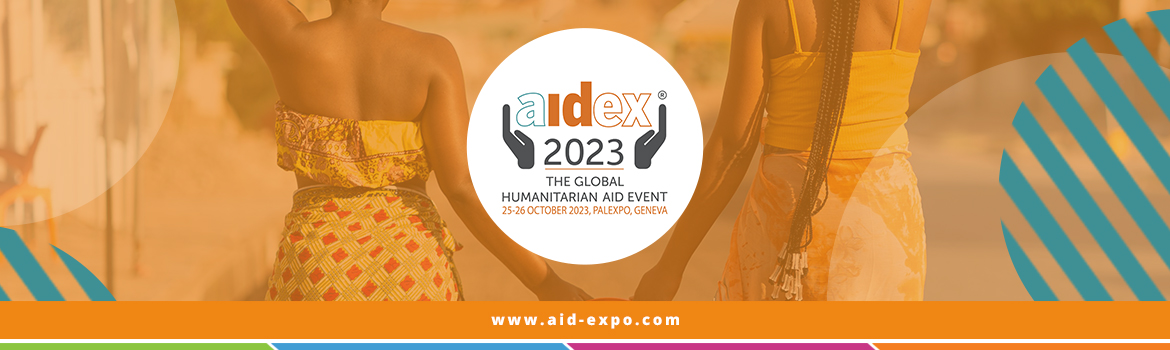
📅 25-26 October 2023
Palexpo, Geneva
The world’s leading humanitarian aid and disaster relief event – AidEx is featuring high-level conference sessions, workshops, discussion groups, impact sessions, case studies, relief and international development, and training programmes geared to solve the challenges in aid.
The main agenda theme of this year’s AidEx is ‘Addressing the forgotten crises – how can we manage and anticipate crises when so much of our focus is on Ukraine? The conference will shine a light on other crises that are obscured by the war in Europe and explore creative solutions to turn the tide on the crises that are not getting the attention they deserve.
AidEx is co-located with Development2030, bringing together global development actors to achieve the sustainable development goals. Together, both events will bring aid, relief and international development professionals all under the same roof to explore the latest innovations, meet new suppliers, share your experiences with your peers, build meaningful relationships and continue the conversation afterwards.
In 2022, 2800+ participants attended from 60+ countries including significant participation from UN agencies, the EU, Red Cross and Red Crescent Societies, local and international NGOs, donors, foundations, private investors, government and the private sector.