

Add us as your preferred source on Google to see more of our content in Search.
 Add to Preferred Sources
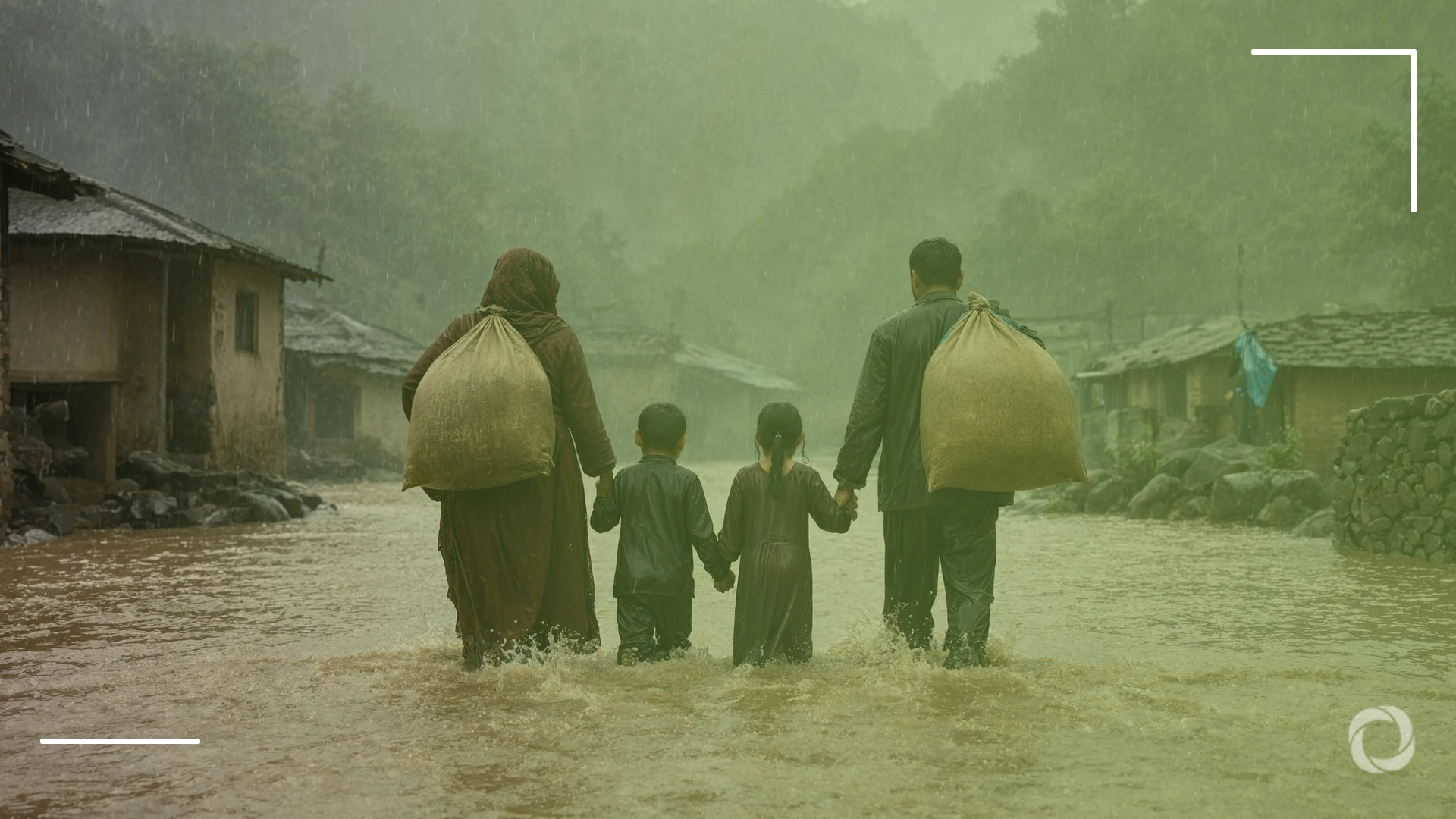
Catastrophic flash floods, heatwaves, landslides, wildfires, and heavy rainfall are making 2026 a year of devastating weather crises globally. From Nepal’s flash floods that claimed more than 1,410 lives to heatwaves across Europe and heavy monsoon rains causing fatalities and displacement in South Africa, extreme weather is triggering immense human suffering and economic damage.
Warming oceans, shifting climate patterns, and unpredictable atmospheric activity are continuing to fuel the frequency and intensity of these events.
With 2026 still underway, there are even more extreme weather events on the horizon, highlighting the urgent need for more climate finance and efficient early warning systems to mitigate future impacts.
The link between the 2026 weather crises and climate change
The frequency of catastrophic events has risen in 2026, with extreme heat and unseasonal rainfall occurring in unexpected regions. Since June, the world has witnessed severe human-induced weather anomalies – ranging from heatwaves in Europe and droughts in Africa, to wildfires and the recent catastrophic flooding in Nepal. Furthermore, the World Meteorological Organization predicts there will be uncharacteristically intense rainfall driven by El Niño during the last quarter of 2026.
According to DevelopmentAid research, human-induced climate change has its roots in the continued greenhouse gas (GHG) emissions, land misuse, and deforestation – activities that are mainly concentrated in industrialized nations. Although developing nations generate roughly 75% of global GHG emissions, many are low-emitting countries that are nevertheless bearing the most serious consequences of the resulting climate disruptions.
Poor and developing nations are bearing the brunt of climate change
Least Developed Countries are home to over one billion people and account for roughly just 4% of global GHG emissions, yet bear the heaviest burden of climate change impacts.
Africa is responsible for approximately 2 to 3% of global GHG emissions but remains the continent that is most vulnerable to the impacts of climate change, which fuel poverty and natural disasters, according to DevelopmentAid.
According to a World Bank Report, developing countries have faced approximately eight times as many climate-related natural disasters over the last 10 years compared to the 1980s. By 2050, it is expected that if environmental changes are not addressed, at least 200 million people could be internally displaced and 130 million pushed into extreme poverty.
As a result, developing countries are calling for climate justice by demanding increased climate adaptation finance to mitigate the impacts and increase resilience.
What is climate justice, and why are developing nations demanding it?
Research shows that the world’s wealthiest nations have been responsible for two-thirds of global warming since 1990, mainly through the burning of fossil fuels. Climate justice means that those nations should contribute sufficient financial support to allow the impacts of climate change to be addressed, mainly in low-emitting nations.
Top climate-change-fueled weather crises in 2026
Rising temperatures in the Himalayas and flash floods in Nepal
Rapid warming across the Himalayan region – home to thousands of glaciers – has destabilized ice formations, leading to massive glacial collapses and an ice-rock avalanche in late August 2026 that caused huge flash floods in Nepal. Wouter Buytaert, Professor of Hydrology and Water Resources at Imperial College London, explains that despite scientific research into the exact cause of such flash floods, climate change is nonetheless a key risk factor even though Nepal emits just 0.05% of global carbon emissions.
In an interview with CNN, he stated that the flash flooding in Nepal is exactly the type of occurrence that is triggered by climate change, explaining that “global warming shrinks glaciers, enabling them to break apart.”
More than 1,410 deaths have now been confirmed and more than 5,000 people remain missing.
Increasing rainfall intensity and flooding in Bangladesh
Changes to weather patterns have contributed to more intense rains during the monsoon season in Bangladesh, triggering floods in this South Asian country. According to a BBC report, the floods have affected at least one million people, with 51 people dying in July. Despite the country’s high susceptibility to flooding due to its geography and location, weather scientists warn that climate change will cause rainfall to become more intense and frequent, thus increasing the severity of floods.
Recurring heatwaves in Europe
Carbon emissions from fossil fuels continue to trap more heat in the atmosphere. Europe remains vulnerable to heatwaves due to changing climate patterns and its proximity to the Arctic. Recent research by World Weather Attribution indicates that there is now an almost 20% probability of heatwaves in Europe every June due to climate change.
Heavy rainfall and flooding in Southern Africa
During the first quarter of 2026, devastating floods struck South Africa with heavy rainfall having intensified by 40% since pre-industrial times. The extreme precipitation meant that floods are now more severe and more frequent in vulnerable regions such as KwaZulu-Natal and the Kruger National Park. The heavy rains and flash floods are being attributed to La Niña, caused by the Southern Oscillation – a natural climate pattern that affects global temperatures in the central and eastern equatorial Pacific.
Forecasts of heavy rains in East Africa due to El Niño
El Niño is a naturally occurring climate phenomenon that develops every two to seven years, when sea-surface temperatures increase in the central and eastern tropical Pacific Ocean. It is expected that this year’s El Niño will increase flooding during the last quarter of the rainy season, leading to almost three million people being displaced, according to the Danish Refugee Council.
Humanitarian costs of major weather crises
The recent unprecedented weather crises are leaving millions in dire need of humanitarian assistance, particularly in developing nations. Following the deadly Nepal flash floods, the Nepalese government has estimated the long-term reconstruction costs will be US$5 billion which represents almost 10% of the country’s GDP. As a result, the nation is seeking recovery financing from developed nations.
Weather crises disrupt the production, transportation, and distribution of food and medical supplies. According to the Food and Agriculture Organization, this year’s El Niño will impact agricultural production in developing nations with the most vulnerable regions being Africa, Southeast Asia, and Central America’s dry regions. In 2015-2016, El Niño impacted at least 60 million people and led to the need for US$5 billion in humanitarian aid in 23 nations.
Wrap up
Human-caused climate change is severely impacting the world, particularly the Global South due to the region having limited resources to curb the effects. Despite emitting just 10% of GHGs, developing nations are nevertheless bearing the brunt of the effects of climate change, leading to a call for climate justice in terms of more climate finance and humanitarian aid to mitigate climate emergencies in those nations.