
Add us as your preferred source on Google to see more of our content in Search.
 Add to Preferred Sources
Ebola outbreak made first victims in Uganda, Venezuelans leaving their country have reached four million and UNHCR called on the Finnish EU Council Presidency to push for progress in asylum reform. Here is what you missed from last week’s headlines in the international development sector:
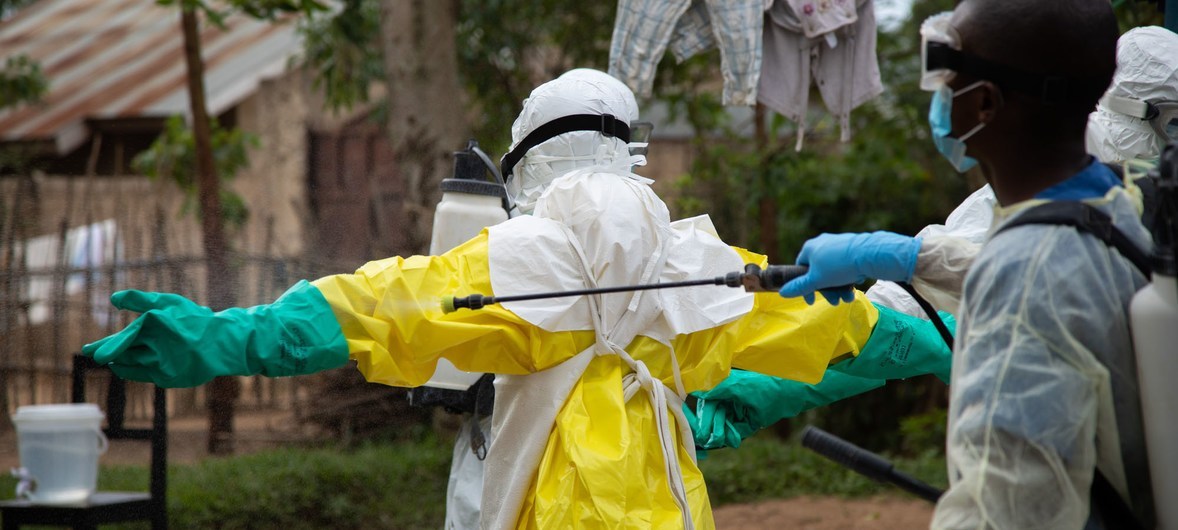
Ebola virus claimed first victims in Uganda
Two Ebola deaths were confirmed in Uganda last week, identified as linked to the ongoing outbreak in neighboring Democratic Republic of the Congo (DRC). Although there have been numerous previous alerts, these were the first confirmed cases in Uganda during the Ebola outbreak on-going in the DRC.
According to the U.S. Centers for Disease Control and Prevention (CDC), who announced the activation of its Emergency Operations Center to support the inter-agency response to the outbreak, the DRC outbreak is the second largest outbreak of Ebola ever recorded and the largest outbreak in DRC’s history.
The Eu has also stepped up its assistance, announcing emergency funding of €3.5 million, of which €2.5 million is for Uganda and €1 million for South Sudan.
“We are committed to continuing our assistance to bring this outbreak to an end, for as long as it takes,” said Christos Stylianides, Commissioner for Humanitarian Aid and Crisis management and EU Ebola coordinator.
In addition to these, UNICEF has launched an emergency Ebola response plan in Uganda. The move follows months of preparedness and prevention efforts as Ebola cases have continued increase in DRC, where there have been more than 2,000 infections and nearly 1,400 deaths in the country’s worst recorded outbreak after it began last August.
Refugees and migrants from Venezuela top four million
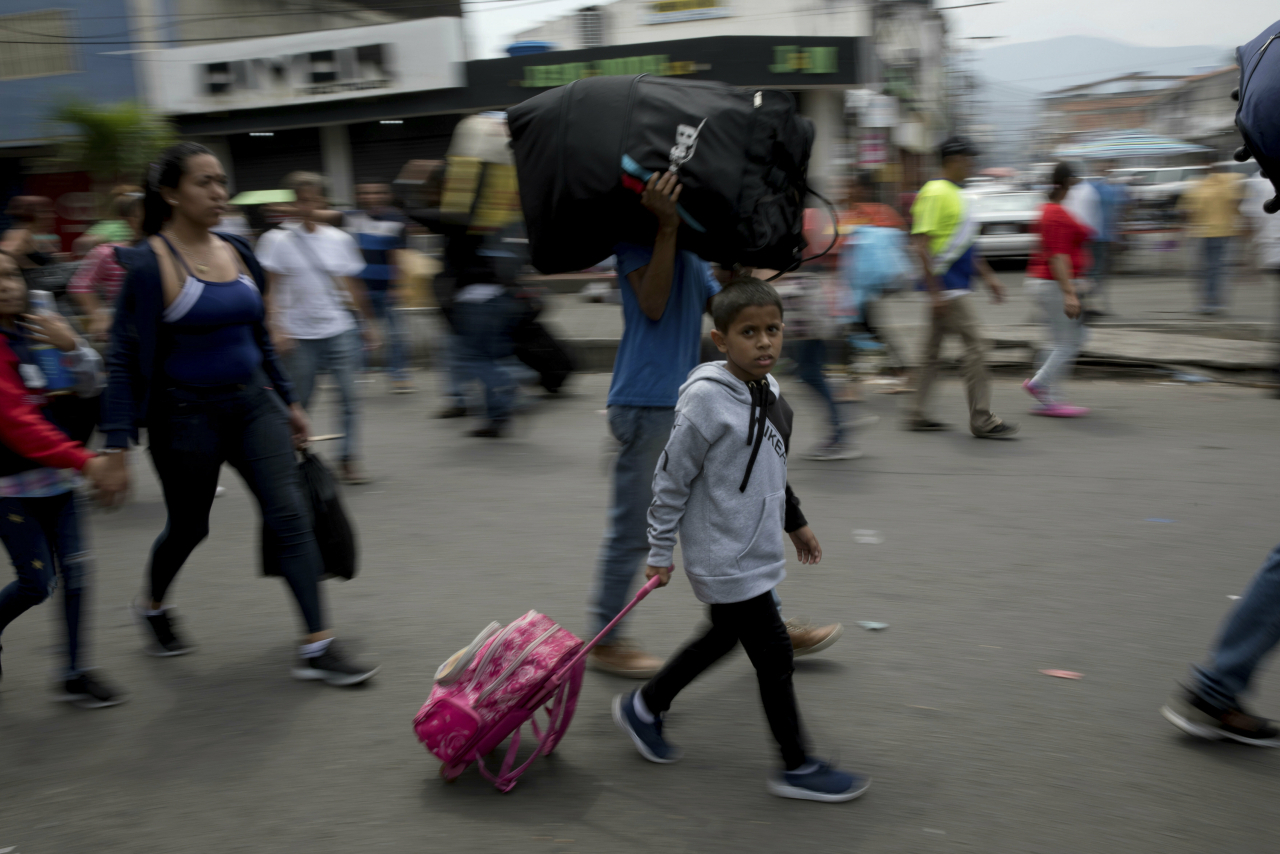
The number of Venezuelans leaving their country has reached four million, IOM, the International Organization for Migration, and UNHCR, the UN Refugee Agency, announced. Latin American countries are hosting the vast majority of Venezuelans.
Worldwide, only Syrian refugees, at 5.6 million, surpass Venezuelans as the largest population displaced from their country.
“Latin American and Caribbean countries are doing their part to respond to this unprecedented crisis, but they cannot be expected to continue doing it without international help,” said Eduardo Stein, joint UNHCR-IOM Special Representative for Venezuelan refugees and migrants.
Governments in the region have established mechanisms for coordinating their response and facilitating the legal, social and economic inclusion of Venezuelan citizens. Chief among them is the Quito Process, which has brought together Latin American countries affected by the outflow of Venezuelan refugees and migrants. To complement these efforts, a humanitarian Regional Refugee and Migrant Response Plan (RMRP) was launched last December, targeting 2.2 million Venezuelans and 580,000 people in host communities in 16 countries. So far, the RMRP is only 21 percent funded.
UN Deputy High Commissioner for Refugees Kelly Clements made an impassioned appeal for more support for countries in Latin America and the Caribbean hosting those in need of international protection. “Stronger engagement by the international community is essential,” stressed the Commissioner.
Meanwhile, UNICEF is concerned that the current situation in Venezuela has reduced children’s access to essential services and increased their vulnerability, rolling back decades of progress. “One-third of children in Venezuela need help accessing basic nutrition, health and education services, according to preliminary UN estimates,” said Paloma Escudero, UNICEF Director of Communication.
UNHCR calls on Finnish EU Council Presidency to push for progress in asylum reform
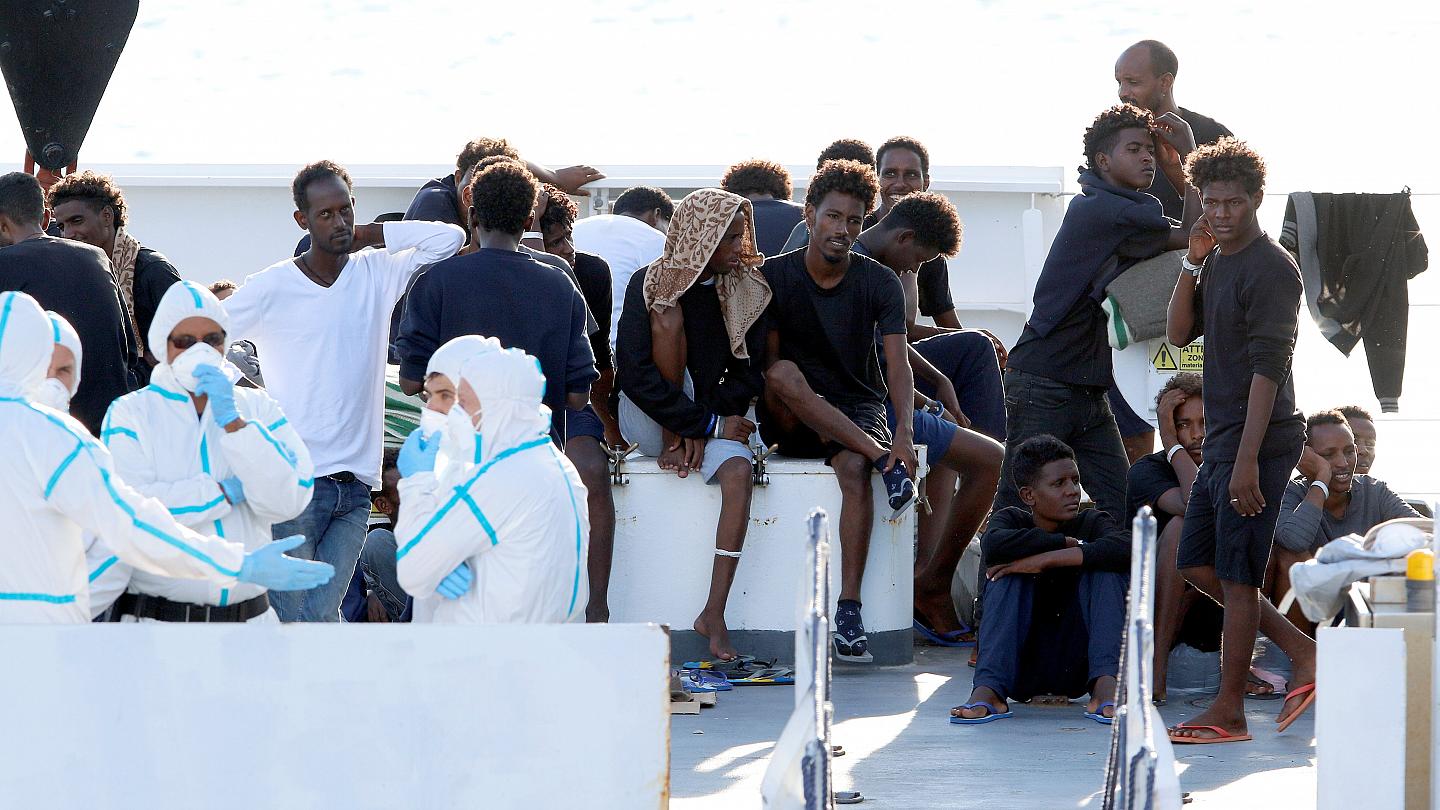
UNHCR, the UN Refugee Agency, released its recommendations for the Finnish Presidency of the Council of the European Union which starts on 1 July 2019. The refugee agency recommends that the Finnish Presidency focuses on two urgent priorities: building cooperation and solidarity with refugees and host communities and pushing for an effective way of sharing responsibility among the EU Member States.
“The EU has a unique opportunity to finally move forward and tackle reforms that are necessary and can be delayed no longer,” said Gonzalo Vargas Llosa, UNHCR’s Regional Representative for EU Affairs.
Among others, UNHCR urges the Finnish Presidency to support a global resettlement strategy developed by UNHCR and partners to reduce the gap between resettlement opportunities and needs and to address statelessness.
Here’s what else has happened
Malawi: The World Bank approved a $70 million operation to help Malawi recover from Tropical Cyclone Idai. The operation will focus on tackling the economic and humanitarian costs associated with the impact of the cyclone and will strengthen the institutional and financial capacity of the government to prepare for, and deal with future similar crises.
Urban health: The World Meteorological Organization Congress endorsed a new Master Plan to set in motion joint initiatives to achieve the sustainable provision of integrated urban and health services. It comes after the agency signed up to the global commitment to reduce deaths due to air pollution by two thirds by 2030 and co-founded the Health, Environment, and Climate Change Coalition with WHO, UNEP, and UNFCCC.
Africa Solidarity Trust Fund: Donors pledged $17 million to replenish the Africa Solidarity Trust Fund, an initiative which aims to provide food security and eliminate rural poverty on the continent. The pledges were made at a high-level donor round table on the sidelines of the African Development Bank’s 2019 Annual Meetings.
Emmanuel Macron: Emmanuel Macron and Dr. Tedros Adhanom Ghebreyesus, WHO Director-General signed a Declaration of Intent to establish a WHO Academy that will revolutionize lifelong learning in health. The Academy aims to reach millions of people with innovative learning via a state-of-the-art digital learning experience platform at a campus in Lyon and embedded in the six WHO regions.
Libya: More than 2,500 Libyans have been forced to flee their homes after heavy rainfalls caused severe flooding in the town of Ghat, some 1,300 km south-west of Tripoli. The rains, which started on 28 May, have already claimed the lives of four people, while thirty more are injured.
Reports
OCHA Annual Report 2018
OCHA’s 2018 Annual Report highlights how the organization coordinated responses around the globe to alleviate suffering, taking stock of OCHA’s actions and activities during 2018, and highlighting the role of OCHA, Member States, and other United Nations and civil society partners in ensuring that the most vulnerable people in crises received timely and quality humanitarian assistance.
According to the report, last year Donors provided more than $15 billion for the UN-coordinated appeals.
“This is a clear sign of the compassion and humanity of our donors and their citizens”, said UN humanitarian chief Mark Lowcock. “But it also demonstrates the trust in the global humanitarian system, which undoubtedly saves millions of lives every year.”
2018 Annual Statistical Report on United Nations Procurement
UN organizations spent $18.8 billion on goods and services over the year 2018, according to a new report published by UNOPS on behalf of the UN system.
The 2018 Annual Statistical Report on UN Procurement analyzes the annual UN spend on goods and service and shows the extent to which sustainability considerations are incorporated into UN procurement processes.
The report says that last year, UN procurement from developing countries, countries with economies in transition and least developed countries reached its highest level ever – $11.7 billion, compared to $10.9 billion in 2017.
Events announced
“Kigali in Action” Expert Group Meeting
Vienna, Austria
20-21 June 2019
The two-day Expert Group Meeting is expected to provide an effective platform to share country experiences, best practices and lessons learned. Speakers from key institutions and National Ozone Units, directly engaged in the implementation of the Montreal Protocol, will share their experiences and help participants connect with solutions for successful planning and implementation.
Higher Education Sustainability Initiative Global Event (HESI) 2019
New York City, US
10 July 2019
The event will explore how the 2030 Agenda for Sustainable Development is changing the way higher education institutions are working and how they engage critically with the SDGs, with a specific focus on SDG 4 (Quality Education), 8 (Decent Work and Economic Growth) and 17 (Partnership for the Goals). It will also seek to generate a new commitment and vision for the kind of impact that partners are collectively having on this agenda.
ITU’s Global Symposium for Regulators (GSR-19)
Port Vila, Vanuatu
9-12 July 2019
With the theme of Inclusive connectivity: The future of regulation, this year’s event will be held in Port Vila at the invitation of the Government of Vanuatu. The symposium features specialist speakers and a dynamic programme focused around some of the most challenging topics facing today’s tech regulators. A highlight of the official opening on Wednesday, 10 July will be a Leadership Debate led by Commissioners from the UN Broadband Commission for Sustainable Development focused on ‘Getting the Next 3.7 Billion Online’.
Latin America and Caribbean Climate Week 2019 (LAC)
Salvador, Brazil
19-23 August 2019
Latin America & Caribbean Climate Week will help to set the tone both for the September Climate Summit in New York and for the December UN Climate Change Conference COP25 in Santiago, Chile. The High-Level segment will feature ministers, policymakers, private sector leaders. The event will also showcase on-the-ground examples of climate solutions in the region that are cutting emissions and helping communities adapt to the changing climate.